¡Ay, ser un buen hombre no tiene marca fija, y el desconcierto rige la humana progenie!
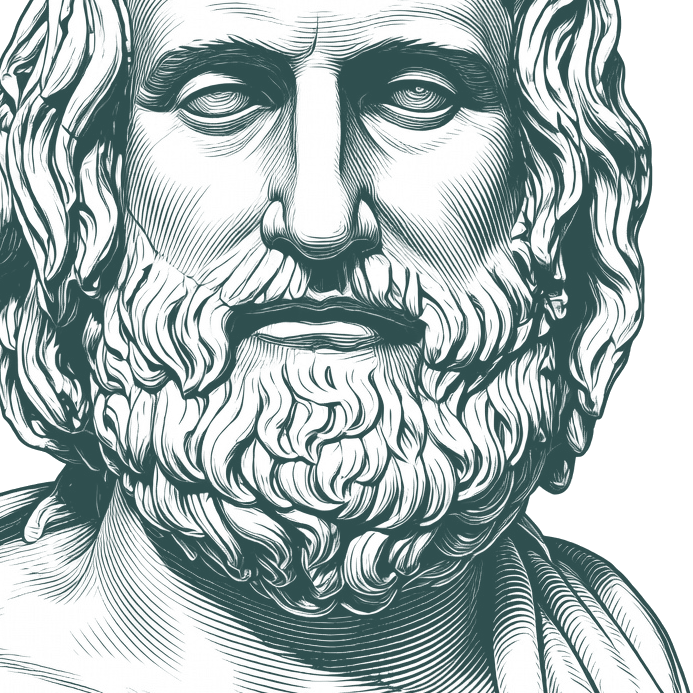
¡Cuántas veces he visto a un hombre que engendró un noble pad… - Euripides
""
¡Ay, ser un buen hombre no tiene marca fija, y el desconcierto rige la humana progenie! ¡Cuántas veces he visto a un hombre que engendró un noble padre, pero él se muestra como criatura vil! Y vi, también, nacidos de padres sin valor ni estimación, hijos que llegan a mostrar su nobleza. Mil veces vi prudencia y sabiduría muy grande en un miserable y pobre cuerpo. ¿Para juzgar a un hombre qué base escogería uno? ¿La riqueza? ¡Es un pésimo juez! ¿La pobreza? Tampoco. Es falaz y fuente de necesidad que induce al hombre al mal. ¿Las armas son criterio? ¿Qué, basta ver a alguno con su lanza para afirmar que es valiente? ¡En confusión tan grande, es preferible dejar a la ventura y a lo imprevisto el juicio! Veis a este hombre. No era un grande en Argos. No se gloriaba de una bella mansión y alta alcurnia, y entre tantos, se descubre que es todo un noble. No tenéis discreción los que a la turba engañáis con argucias y falacias. Debéis juzgar a un hombre por la noble rectitud de sus costumbres. Gentes así edifican las ciudades y los hogares. ¿Un robusto y gallardo cuerpo? ¡Cuántas veces está vacío de seso y no es sino una estatua en medio de la plaza? Y para resistir a la lanza, es igual brazo fuerte que brazo débil, con tal que haya en el pecho un ánimo esforzado: todo lo hace la bien dispuesta mente y un natural bien constituido.
[MINERVA appears.] MIN. Whither, whither sendest thou this troop to follow [the fugitives,] king Thoas? List to the words of me, Minerva. Cease pursuing, and stirring on the onset of your host. For by the destined oracles of Loxias Orestes came hither, fleeing the wrath of the Erinnyes, and in order to conduct his sister's person to Argos, and to bear the sacred image into my land, by way of respite from his present troubles. Thus are our words for thee, but as to him, Orestes, whom you wish to slay, having caught him in a tempest at sea, Neptune has already, for my sake, rendered the surface of the sea waveless, piloting him along in the ship. But do thou, Orestes, learning my commands, (for thou hearest the voice of a Goddess, although not present,) go, taking the image and thy sister. And when thou art come to heaven-built Athens, there is a certain sacred district in the farthest bounds of Atthis, near the Carystian rock, which my people call Alœ — here, having built a temple, do thou enshrine the image named after the Tauric land and thy toils, which thou hast labored through, wandering over Greece, under the goad of the Erinnyes. But mortals hereafter shall celebrate her as the Tauric Goddess Diana. And do thou ordain this law, that, when the people celebrate a feast in grateful commemoration of thy release from slaughter, [188] let them apply the sword to the neck of a man, and let blood flow on account of the holy Goddess, that she may have honor. But, O Iphigenia, thou must needs be guardian of the temple of this Goddess at the hallowed ascent of Brauron; [189] where also thou shalt be buried at thy death, and they shall offer to you the honor of rich woven vestments, which women, dying in childbed, may leave in their houses. But I command thee to let these Grecian women depart from the land on account of their disinterested disposition, [190] I, having saved thee also on a former occasion, by determining the equal votes in the Field of Mars, Orestes, and t
But if any far-off state there be Dearer than life to mortality, The hand of the Dark hath hold thereof, And mist is under the mist above; So we are sick for life, and cling On earth to this nameless and shining thing, For other life is a fountain sealed, And the deeps below are unrevealed, And we drift on legends for ever.
Enhance Your Quote Experience
Enjoy ad-free browsing, unlimited collections, and advanced search features with Premium.