there they laugh: they do not understand me; I am not the mouth for these ears. - Friedrich Nietzsche
""
there they laugh: they do not understand me; I am not the mouth for these ears.
English
Collect this quote
About
Friedrich Nietzsche
Friedrich Wilhelm Nietzsche (15 October 1844 – 25 August 1900) was a German philosopher, cultural critic, composer, poet, writer, and philologist whose work has exerted a profound influence on modern intellectual history. His critiques of contemporary culture, religion, and philosophy centered on a basic question regarding the foundation of values and morality.
Biography information from
Wikiquote·
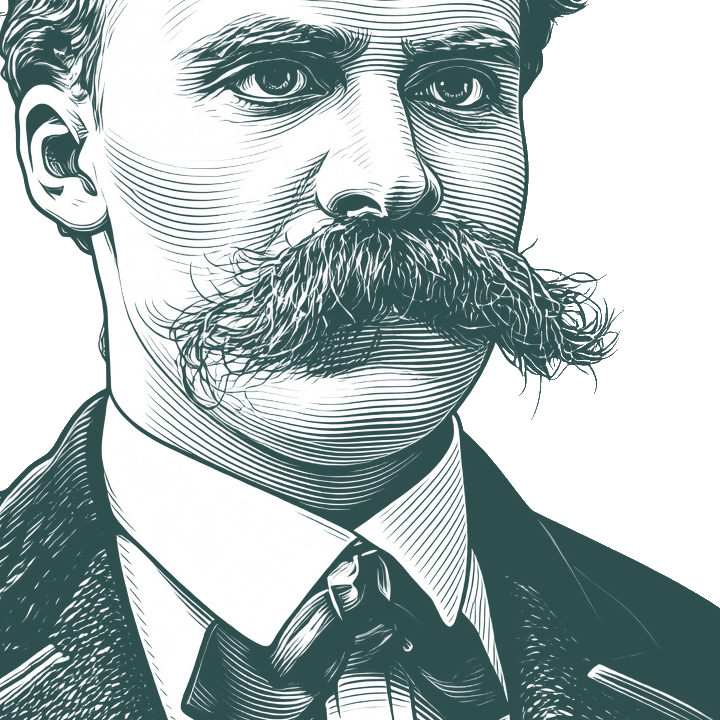
Portrait adapted from
Wikimedia Commons, Friedrich Hermann Hartmann (Public domain / CC0)
Also Known As
Alternative Names:
Friedrich Wilhelm Nietzsche
•
Nietzsche
Who is the most moral man? First, he who obeys the law most frequently, who ... is continually inventive in creating opportunities for obeying the law. Then, he who obeys it even in the most difficult cases. The most moral man is he who sacrifices the most to custom. ... Self-overcoming is demanded, not on account of any useful consequences it may have for the individual, but so that hegemony of custom and tradition shall be made evident.
Philosophisch gesinnt sein. - Gewöhnlich strebt man darnach, für alle Lebenslagen und Ereignisse eine Haltung des Gemüthes, eine Gattung von Ansichten zu erwerben, - das nennt man vornehmlich philosophisch gesinnt sein. Aber für die Bereicherung der Erkenntniss mag es höheren Werth haben, nicht in dieser Weise sich zu uniformiren, sondern auf die leise Stimme der verschiedenen Lebenslagen zu hören; diese bringen ihre eigenen Ansichten mit sich. So nimmt man erkennenden Antheil am Leben und Wesen Vieler, indem man sich selber nicht als starres, beständiges, Eines Individuum behandelt.
Limited Time Offer
Premium members can get their quote collection automatically imported into their Quotewise collections.
I have somehow something like "influence" ... In the Anti-Semitic Correspondence ... my name is mentioned in almost every issue. Zarathustra ... has charmed the anti-Semites; there is a special anti-Semitic interpretation of it that made me laugh very much.