We see, as in the universes of the material kosmos, after meteorological, vegetable, and animal cycles, man at last arises, born through them, to pro… - Walt Whitman
""
We see, as in the universes of the material kosmos, after meteorological, vegetable, and animal cycles, man at last arises, born through them, to prove them, concentrate them, to turn upon them with wonder and love — to command them, adorn them, and carry them upward into superior realms — so, out of the series of the preceding social and political universes, now arise these States. We see that while many were supposing things established and completed, really the grandest things always remain; and discover that the work of the New World is not ended, but only fairly begun
English
Collect this quote
About
Walt Whitman
Walt Whitman (May 31, 1819 – March 26, 1892) was an American journalist and poet, most famous for his lifelong work on his book Leaves of Grass.
Biography information from
Wikiquote·
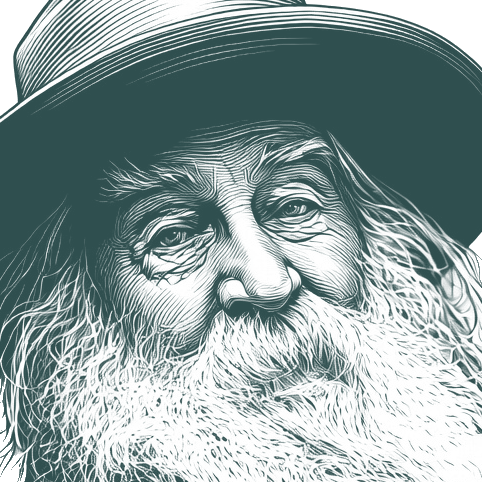
Portrait adapted from
Wikimedia Commons, George Collins Cox / Adam Cuerden (Public domain / CC0)
With the sentiment of the stars and moon such nights I get all the free margins and indefiniteness of music or poetry, fused in geometry's utmost exactness.
My respiration and inspiration...the beating of my heart...the passing of blood and air through my lungs, the sniff of green leaves and dry leaves and of the short and dark colored sea-rocks and of hay in the barn...the delight alone or in the rush of the streets, or along the fields and hillsides, the feeling of health...the full moon trill...the song of me rising from bed and meeting the sun.
Works in ChatGPT, Claude, or Any AI
Add semantic quote search to your AI assistant via MCP. One command setup.
Long enough have you dream'd contemptible dreams, Now I wash the gum from your eyes, You must habit yourself to the dazzle of the light and of every moment of your life