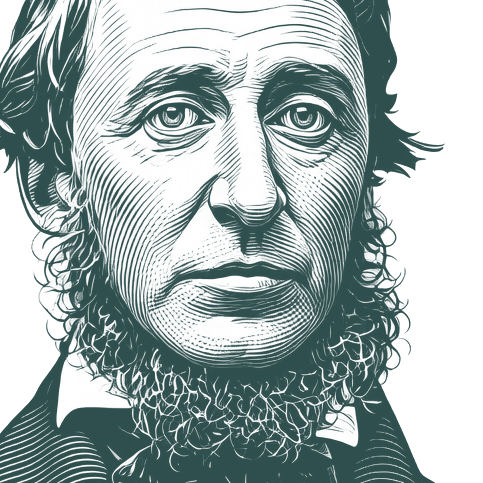
Henry David Thoreau (12 July 1817 – 6 May 1862) was an American essayist, poet, philosopher, abolitionist, naturalist, tax resister, development critic, surveyor, and historian. A leading transcendentalist, Thoreau is best known for his book Walden, a reflection upon simple living in natural surroundings, and his essay Resistance to Civil Government (also known as Civil Disobedience), an argument for disobedience to an unjust state.
Biography information from
Wikiquote·
Portrait adapted from
Wikimedia Commons, B. D. Maxham (Public domain / CC0)
Also Known As
Birth Name:
David Henry Thoreau
Alternative Names:
Thoreau
•
Henry D. Thoreau
•
Henry Thoreau
I have given myself up to nature; I have lived so many springs and summers and autumns and winters as if I had nothing else to do but live them, and imbibe whatever nutriment they had for me; I have spent a couple of years, for instance, with the flowers chiefly, having none other so binding engagement as to observe when they opened; I could have afforded to spend a whole fall observing the changing tints of the foliage. Ah, how I have thriven on solitude and poverty!
The greatest compliment that was ever paid me was when one asked me what I thought, and attended to my answer.
PREMIUM FEATURE
Advanced Search Filters
Filter search results by source, date, and more with our premium search tools.
I was once reproved by a minister who was driving a poor beast to some meeting-house horse-sheds among the hills of New Hampshire, because I was bending my steps to a mountain-top on the Sabbath, instead of a church, when I would have gone farther than he to hear a true word spoken on that or any day. He declared that I was 'breaking the Lord's fourth commandment,' and proceeded to enumerate, in a sepulchral tone, the disasters which had befallen him whenever he had done any ordinary work on the Sabbath. He really thought that a god was on the watch to trip up those men who followed any secular work on this day, and did not see that it was the evil conscience of the workers that did it. The country is full of this superstition, so that when one enters a village, the church, not only really but from association, is the ugliest looking building in it, because it is the one in which human nature stoops the lowest and is most disgraced. Certainly, such temples as these shall erelong cease to deform the landscape. There are few things more disheartening and disgusting than when you are walking the streets of a strange village on the Sabbath, to hear a preacher shouting like a boatswain in a gale of wind, and thus harshly profaning the quiet atmosphere of the day.