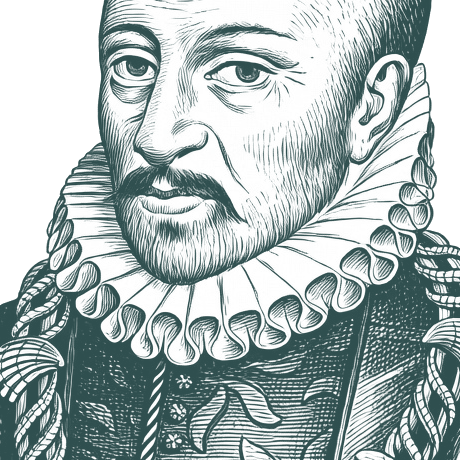
The usefulness of living lies not in duration but in what you make of it. Some have lived long and lived little. See to it while you are still here. … - Michel de Montaigne
""
The usefulness of living lies not in duration but in what you make of it. Some have lived long and lived little. See to it while you are still here. Whether you have lived enough depends not on a count of years but on your will.
Michel de Montaigne (Michel Eyquem, lord of the manor of Montaigne, Dordogne) (28 February 1533 – 13 September 1592) was an influential French Renaissance writer, generally considered to be the inventor of the personal essay.
Let the tutor make his charge pass everything through a sieve and lodge nothing in his head on mere authority and trust: let not Aristotle's principles be principles to him any more than those of the Stoics or Epicureans. Let this variety of ideas be set before him; he will choose if he can; if not, he will remain in doubt. Only the fools are certain and assured. For if he embraces Xenophon's and Plato's opinions by his own reasoning, they will no longer be theirs, they will be his. He who follows another follows nothing. He finds nothing; indeed he seeks nothing. We are not under a king; let each one claim his own freedom. Let him know that he knows, at least. He must imbibe their ways of thinking, not learn their precepts. And let him boldly forget, if he wants, where he got them, but let him know how to make them his own. Truth and reason are common to everyone, and no more belong to the man who first spoke them than to the man who says them later. It is no more according to Plato than according to me, since he and I understand and see it the same way. The bees plunder the flowers here and there, but afterward they make of them honey, which is all theirs; it is no longer thyme or marjoram. Even so with the pieces borrowed from others; he will transform and blend them to make a work of his own, to wit, his judgment. His education, work, and study aim only at forming this.