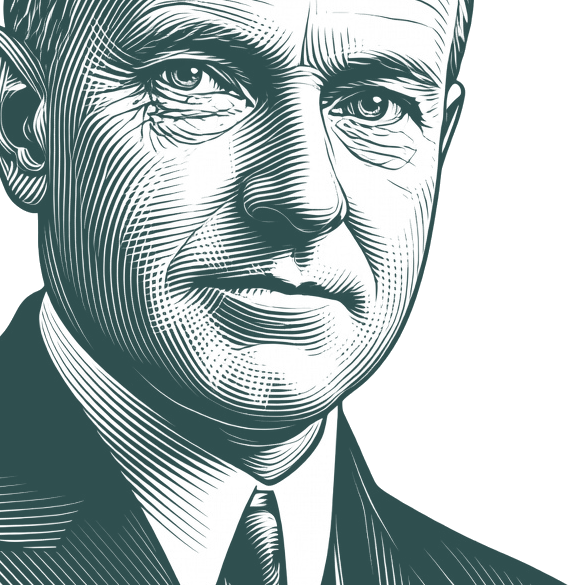
Railways. The railways during the past year have made still further progress in recuperation from the war, with large rains in efficiency and ability… - Calvin Coolidge
""
Railways. The railways during the past year have made still further progress in recuperation from the war, with large rains in efficiency and ability expeditiously to handle the traffic of the country. We have now passed through several periods of peak traffic without the car shortages which so frequently in the past have brought havoc to our agriculture and industries. The condition of many of our great freight terminals is still one of difficulty and results in imposing, large costs on the public for inward-bound freight, and on the railways for outward-bound freight. Owing to the growth of our large cities and the great increase in the volume of traffic, particularly in perishables, the problem is not only difficult of solution, but in some cases not wholly solvable by railway action alone.
English
Collect this quote
About
Calvin Coolidge
John Calvin Coolidge Jr. (4 July 1872 – 5 January 1933) was the 30th president of the United States (1923–29). A Republican lawyer from Vermont, Coolidge worked his way up the ladder of Massachusetts state politics, eventually becoming governor of that state. His response to the Boston Police Strike of 1919 thrust him into the national spotlight and gave him a reputation as a man of decisive action. Soon after, he was elected as the 29th vice president in 1920 and succeeded to the presidency upon the sudden death of Warren G. Harding in 1923. Elected in his own right in 1924, he gained a reputation as a small-government conservative.
Biography information from
Wikiquote·
Portrait adapted from
Wikimedia Commons, Harris & Ewing (Public domain / CC0)
Also Known As
Birth Name:
John Calvin
Alternative Names:
John Calvin Coolidge Jr.
•
John Calvin Coolidge
•
President Coolidge
•
J. C. Coolidge
•
C. Coolidge
•
Silent Cal
•
Silent Cal Coolidge
We do not need more intellectual power, we need more spiritual power. We do not need more of the things that are seen, we need more of the things that are unseen.
It is our purpose in our intercourse with foreign powers to rely not on the strength of our fleets and our armies but on the justice of our cause. For these reasons our country has not wished to maintain huge military forces. It has been convinced that it could better serve itself and better serve humanity by using its resources for other purposes.
Works in ChatGPT, Claude, or Any AI
Add semantic quote search to your AI assistant via MCP. One command setup.
It is for these reasons that it seems clear that the results of the war will be lost and we shall only be entering a period of preparation for another conflict unless we can demobilize the racial antagonisms, fears, hatreds, and suspicions, and create an attitude of toleration in the public mind of the peoples of the earth. If our country is to have any position of leadership, I trust it may be in that direction, and I believe that the place where it should begin is at home. Let us cast off our hatreds. Let us candidly accept our treaties and our natural obligations of peace. We know and everyone knows that these old systems, antagonisms, and reliance on force have failed. If the world has made any progress, it has been the result of the development of other ideals. If we are to maintain and perfect our own civilization, if we are to be of any benefit to the rest of mankind, we must turn aside from the thoughts of destruction and cultivate the thoughts of construction. We can not place our main reliance upon material forces. We must reaffirm and reinforce our ancient faith in truth and justice, in charitableness and tolerance. We must make our supreme commitment to the everlasting spiritual forces of life. We must mobilize the conscience of mankind.