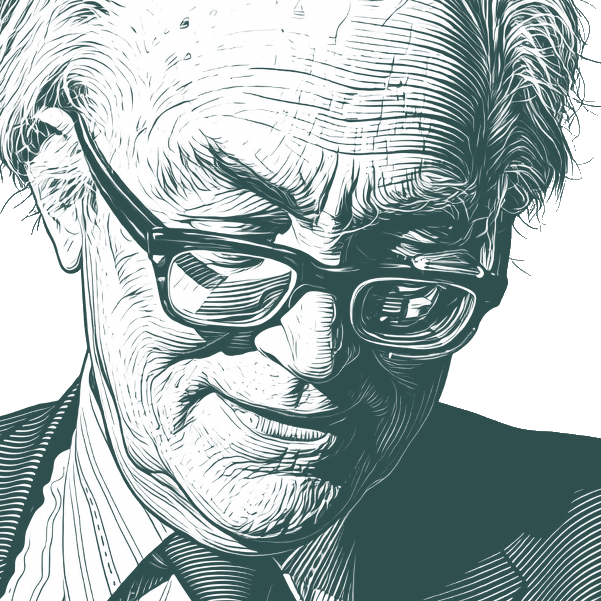
Michael Mackintosh Foot (23 July 1913 – 3 March 2010) was a British politician who served as Leader of the Opposition and Leader of the Labour Party from 1980 to 1983. Foot began his working life as a journalist on Tribune and the Evening Standard and co-wrote the 1940 polemic against appeasement of Hitler, Guilty Men, under a pseudonym. Foot served as a Member of Parliament (MP) from 1945 to 1955 and again from 1960 until he retired in 1992. A passionate orator, and associated with the left wing of the Labour Party for most of his career, Foot was an ardent supporter of the Campaign for Nuclear Disarmament (CND) and of British withdrawal from the European Economic Community (EEC). He was appointed to the Cabinet as Secretary of State for Employment under Harold Wilson in 1974, and later served as Leader of the House of Commons (1976–1979) under James Callaghan. He was also Deputy Leader of the Labour Party under Callaghan from 1976 to 1980.
I am bitterly opposed to any form of legislation, particularly legislation introduced by a Labour Government, which involves an element of colour bar. It is an appalling thing to have happened. I want to see us returning as swiftly as possible to a situation where we wipe away this stain on the reputation of the Labour movement.
Like it or not, one of the most spectacular events of our age is the comparative success of the Communist economic systems. ... Do you seriously imagine that there is no challenge from the Communist States on this level? And who do you think will win the contest if we stumble on as we are—the Communist States, which are not afraid of full production, or the Western States, which have still never achieved for any considerable period full production and full employment without inflation? Yes, who will win—the Communist States, who are turning out trained technicians at an unexampled pace, or the Western powers, who contentedly spend more on advertising than education?
In the Labour movement they said they would have no truck with coalition, but if Britain stayed in the EEC then for decades to come they would be enmeshed in various forms of coalition government than ever before. That was the most important issue of all. If in Britain the people did not like a government they could vote it out of office, but they had no similar recourse in the case of the institutions of the EEC, which had supreme powers and which were undemocratic.