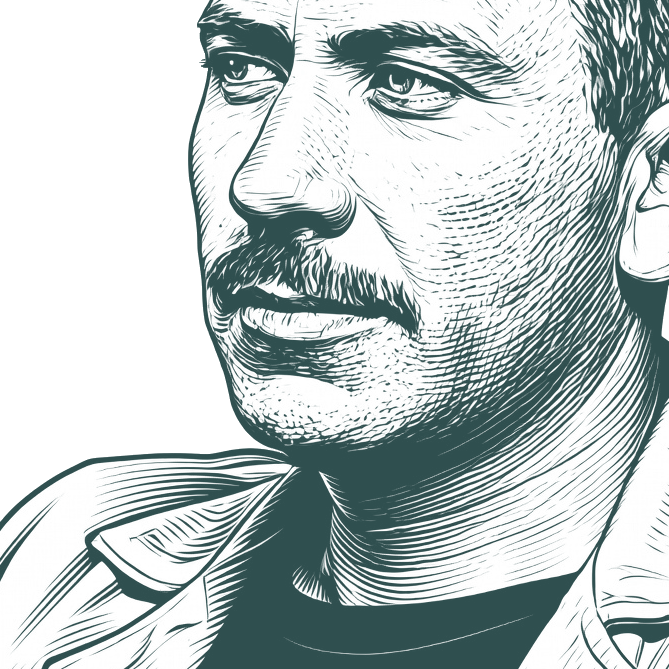
John Ernst Steinbeck Jr. (27 February 1902 – 20 December 1968) was an American writer. A recipient of the Nobel Prize for Literature in 1962, his works include the novella Of Mice and Men (1937) and the novel The Grapes of Wrath (1939, Pulitzer Prize for Fiction, 1940), both of which examine the lives of the working class and migrant workers during the Great Depression.
Biography information from
Wikiquote·
Portrait adapted from
Wikimedia Commons, McFadden Publications, Inc.; no photographer credited; photo likely the work of Sonya Noskowiak, as Steinbeck is wearing the same clothes from her 1935 studio session that produced the work shown here: https://www.si.edu/object/npg_NPG.2006.74 (Public domain / CC0)
Also Known As
Birth Name:
Jeffery Ernest Steinbeck
Alternative Names:
John Ernst Steinbeck, Jr.
•
John Ernst Steinbeck
•
John Ernest Steinbeck
•
John Ernst Steinbeck Jr
•
Steinbeck
Portrait from Wikimedia Commons. Credit: McFadden Publications, Inc.; no photographer credited; photo likely the work of Sonya Noskowiak, as Steinbeck is wearing the same clothes from her 1935 studio session that produced the work shown here: https://www.si.edu/object/npg_NPG.2006.74. Used under Public domain / CC0. Processed and styled by Quotewise.
Unlimited Quote Collections
Organize your favorite quotes without limits. Create themed collections for every occasion with Premium.
Our people are good people, our people are kind people. Pray God someday kind people won't all be poor. Pray God someday a kid can eat. And the associations of owners know that some day the praying would stop. And there's the end.
Some day, his mind said, that boy would know what things were in the books and what things were not.
Try QuoteGPT
Chat naturally about what you need. Each answer links back to real quotes with citations.
I should have known […] I am the rain. […] I am the land […] and I am the rain. The grass will grow out of me in a little while.