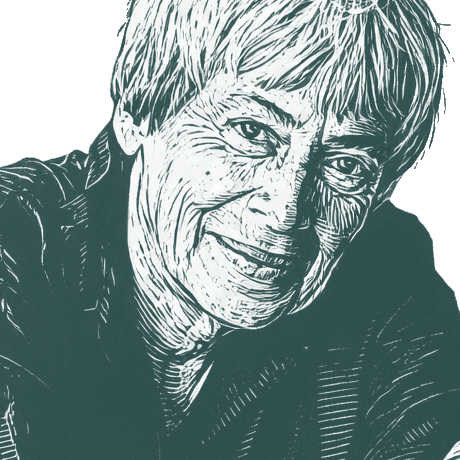
The trouble is that we have a bad habit, encouraged by pedants and sophisticates, of considering happiness as something rather stupid. Only pain is i… - Ursula K. Le Guin
""
The trouble is that we have a bad habit, encouraged by pedants and sophisticates, of considering happiness as something rather stupid. Only pain is intellectual, only evil interesting. This is the treason of the artist: a refusal to admit the banality of evil and the terrible boredom of pain. If you can’t lick ‘em, join ‘em. If it hurts, repeat it. But to praise despair is to condemn delight, to embrace violence is to lose hold of everything else. We have almost lost hold; we can no longer describe a happy man, nor make any celebration of joy.
Ursula K. Le Guin (21 October 1929 – 22 January 2018) was an American writer, known mostly for her work in science fiction and fantasy. She received the Hugo Award, Nebula Award, Locus Award, and World Fantasy Award, and was made a Grandmaster of Science Fiction in 2003.
Biography information from
Wikiquote·
Portrait adapted from
Wikimedia Commons, Marian Wood Kolisch, Oregon State University Restored by Adam Cuerden (CC BY-SA)
Also Known As
Birth Name:
Ursula Kroeber
Alternative Names:
Ursula Kroeber Le Guin
•
Ursula Le Guin
Portrait from Wikimedia Commons. Credit: Marian Wood Kolisch, Oregon State University Restored by Adam Cuerden. Used under CC BY-SA. Processed and styled by Quotewise.
Works in ChatGPT, Claude, or Any AI
Add semantic quote search to your AI assistant via MCP. One command setup.
She saw time naïvely as a road laid out. You walked ahead, and you got somewhere. If you were lucky, you got somewhere worth getting to.
To find a new world, maybe you have to have lost one. Maybe you have to be lost. The dance of renewal, the dance that made world, was always danced here at the edge of things, on the brink, on the foggy coast.
Works in ChatGPT, Claude, or Any AI
Add semantic quote search to your AI assistant via MCP. One command setup.
How does one hate a country, or love one? [...] I know people, I know towns, farms, hills and rivers and rocks, I know how the sun at sunset in autumn falls on the side of a certain plowland in the hills; but what is the sense of giving a boundary to all that, of giving it a name and ceasing to love where the name ceases to apply? What is love of one's country; is it hate of one's uncountry?