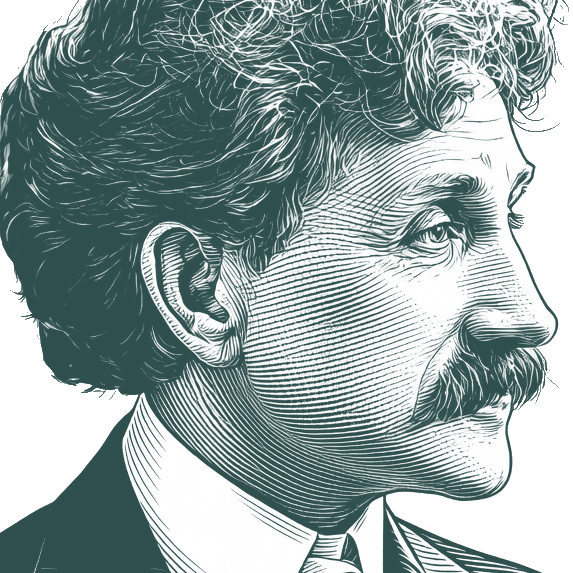
Revision of character will be a much more tangible and scientific thing when the physiology of psychology becomes more than a controverted conjecture… - J. Howard Moore
""
Revision of character will be a much more tangible and scientific thing when the physiology of psychology becomes more than a controverted conjecture. There has been no attempt, no methodical attempt, to amend character thru physiological and neural violence; and about all we know about the possibilities of such a surgery consists of glimpses caught on occasions of casualty. We do know, however, that neural changes appear promptly and invariably in consciousness, and that there is every reason to suspect perfect parallelism between the neural and psychic processes. This unfailing attendance and dependence of mind on physical phenomena, and the superior tangibility of matter over consciousness, assure the prophet that an accomplished and sensitized attention is the all-essential to the achievement of psychical amendment by neural and physiological alteration. In the New Age which we prevision and approach, among the marvels to amaze our clumsy contemplations will be the miracles of cerebral surgery, the physics of the humors, the science of the physiology of consciousness.
English
Collect this quote
About
J. Howard Moore
John Howard Moore (December 4, 1862 – June 17, 1916) was an American zoologist, philosopher, educator and social reformer. He advocated for the ethical consideration and treatment of animals and authored several articles, books, essays and pamphlets on topics including education, ethics, evolutionary biology, humanitarianism, utilitarianism and vegetarianism. He is best known for his work The Universal Kinship (1906), which advocated for a secular sentiocentric philosophy he called the doctrine of "Universal Kinship", based on the shared evolutionary kinship between all sentient beings.
The earliest examples of human association were those practically of autocentricism. Each individual considered himself the only or chief end for which the universe existed. Each's own individual welfare was the end for which he struggled, and all the rest of the universe, sentient and insentient, was contemplated as means to this.
Let us be honest. Honour to whom honour is due. It will not emaciate our own glory to recognise the excellence and reality of others, or to come face to face with our own frailties. We are our brother's keeper. Our brethern are they that feel. Let us universalise. Our thoughts and sympathies have been too long wingless. The Universe is our Country, and our Kindred are the Populations that Mourn. It is well—it is eminently well, for it is godlike—to send our Magnanimity to the Dusts and the Deeps, our Sunrises to the Uttermost Isles, and our Charity to the Stars.
Enhance Your Quote Experience
Enjoy ad-free browsing, unlimited collections, and advanced search features with Premium.
All of these victimizations, the enslavement of species by species, of race by race, and of class by class, are aspects of one and the same fundamental fact. They are all exemplifications of the same principle—the principle asserting the right to escape one's part in the hardships of life—the doctrine that the weak are, and of right ought to be, the means, and the strong the ends—the doctrine that might makes it right for some to burglarize the lives of others of all that is precious, and at the same time to add to others' woes by the compulsory imposition of their own.