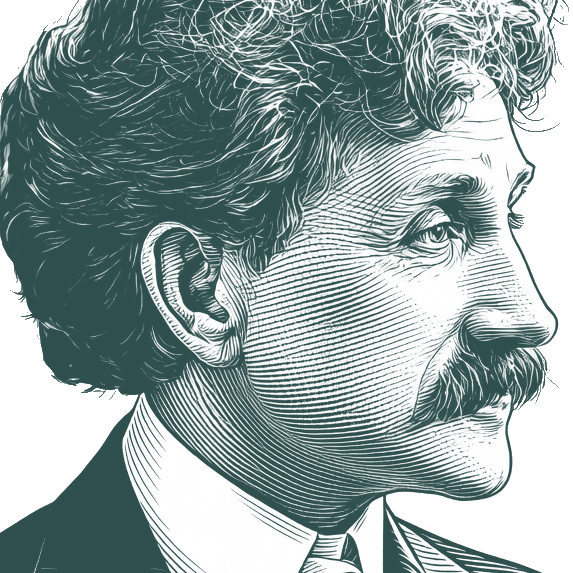
[The Universal Kinship] has furnished me several days of deep pleasure and satisfaction; it has compelled my gratitude at the same time, since it sav… - J. Howard Moore
""
[The Universal Kinship] has furnished me several days of deep pleasure and satisfaction; it has compelled my gratitude at the same time, since it saves me the labor of stating my own long-cherished opinions and reflections and resentments by doing it lucidly and fervently and irascibly for me.
English
Collect this quote
About
J. Howard Moore
John Howard Moore (December 4, 1862 – June 17, 1916) was an American zoologist, philosopher, educator and social reformer. He advocated for the ethical consideration and treatment of animals and authored several articles, books, essays and pamphlets on topics including education, ethics, evolutionary biology, humanitarianism, utilitarianism and vegetarianism. He is best known for his work The Universal Kinship (1906), which advocated for a secular sentiocentric philosophy he called the doctrine of "Universal Kinship", based on the shared evolutionary kinship between all sentient beings.
It ought to be perfectly clear by this time that the popularity and unpopularity of propositions in no way coincide with their truth and falsity. It makes no difference how true a proposition may be or how unreservedly it may finally be accepted by mankind, there is always a period in its early life when it is stoned and misunderstood. It has been so throughout the ages of the past; it is true to-day; and it will continue to be true as long as disparities in heroism and originality exist among men.
Furs just as warm and beautiful as murderous sealskin may be made of plush; and vegetal silk as fine and lustrous as ever was spun by the oak-eating babes of Polyphemus can be made of wood. Vegetal leather has been manufactured in London with the polish and durability of calfskin. And when the demand becomes strong enough to turn human attention profitably to the task, foot-wear just as comely and lasting, and more sanitary and comfortable, will be made at even less cost from plant products.
Enhance Your Quote Experience
Enjoy ad-free browsing, unlimited collections, and advanced search features with Premium.
The dread of death, an instinct so unfailing in all animals, exists, not because existence is intrinsically so sweet, nor because annihilation is so distressing, but because this bugaboo has been an indispensable safeguard against the suicide of the life process. The expectation of post-mortem consciousness, so prevalent and so insistent among human beings, is a hope arising from the concussion of a desire and a fancy—the desire to persist just referred to, and the fancy or hallucination of a double which originated among savages from shadows, images, dreams, and the like.