We need not deplore the renunciation of historical truth when we put forward rational grounds for the precepts of civilization. The truths contained … - Sigmund Freud
""
We need not deplore the renunciation of historical truth when we put forward rational grounds for the precepts of civilization. The truths contained in religious doctrines are after all so distorted and systematically disguised that the mass of humanity cannot recognize them as truth. The case is similar to what happens when we tell a child that new-born babies are brought by the stork. Here, too, we are telling the truth in symbolic clothing, for we know what the large bird signifies . But the child does not know it. He hears only the distorted part of what we say, and feels that he has been deceived; and we know how often his distrust of the grown-ups and his refractoriness actually take their start from this impression. We have become convinced that it is better to avoid such symbolic disguisings of the truth in what we tell children and not to withhold from them a knowledge of the true state of affairs commensurate with their intellectual level.
English
Collect this quote
About
Sigmund Freud
Sigmund Freud ([ˈziːgmʊnt ˈfrɔʏ̯t]; 6 May 1856 – 23 September 1939) was an Austrian neurologist and psychiatrist and the founder of the psychoanalytic school of psychology. He was the father of Anna Freud, the grandfather of Sir Clement Freud and Lucian Freud, and the uncle of Edward Bernays.
Biography information from
Wikiquote·
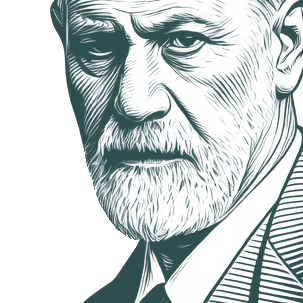
Portrait adapted from
Wikimedia Commons, Max Halberstadt (Public domain / CC0)
A religion, even if it calls itself a religion of love, must be hard and unloving to those who do not belong to it.
public self is a conditioned construct of the inner psychological self.
Here libido and ego-interest share the same fate and have once more become indistinguishable from each other. The familiar egoism of the sick person covers them both. We find it so natural because we are certain that in the same situation we should behave in just the same way. The way in which the readiness to love, however great, is banished by bodily ailments, and suddenly replaced by complete indifference, is a theme which has been sufficiently exploited by comic writers.