Then you think there is no God?
"No, I think there quite probably is one."
"Then why? …"
Mustatpha Mond checked him. "But he manifests himself in dif… - Aldous Huxley
""
Then you think there is no God? "No, I think there quite probably is one." "Then why? …" Mustatpha Mond checked him. "But he manifests himself in different ways to different men. In premodern times he manifested himself as the being that's described in these books. Now …" "How does he manifest himself now?" asked the Savage. "Well, he manifests himself as an absence; as though he weren't there at all." "That's your fault." "Call it the fault of civilization. God isn't compatible with machinery and scientific medicine and universal happiness. You must make your choice. Our civilization has chosen machinery and medicine and happiness. That's why I have to keep these books locked up in the safe. They're smut. People would be shocked it …" The Savage interrupted him. "But isn't it natural to feel there's a God?" "You might as well ask if it's natural to do up one's trousers with zippers," said the Controller sarcastically. "You remind me of another of those old fellows called Bradley. He defined philosophy as the finding of bad reason for what one believes by instinct. As if one believed anything by instinct! One believes things because one has been conditioned to believe them. Finding bad reasons for what one believes for other bad reasons–that's philosophy. People believe in God because they've been conditioned to. "But all the same," insisted the Savage, "it is natural to believe in God when you're alone–quite alone, in the night, thinking about death …" "But people never are alone now," said Mustapha Mond. "We make them hate solitude; and we arrange their lives so that it's almost impossible for them ever to have it."
English
Collect this quote
About
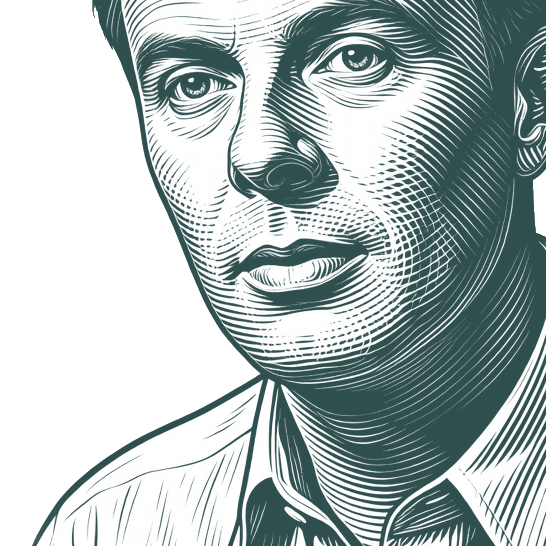
Aldous Huxley
Aldous Leonard Huxley (26 July 1894 – 22 November 1963) was a British author known for his novel Brave New World. He was the grandson of Thomas Henry Huxley and younger brother of Julian Huxley.
First Shakespeare sonnets seem meaningless; first Bach fugues, a bore; first differential equations, sheer torture. But training changes the nature of our spiritual experiences. In due course, contact with an obscurely beautiful poem, an elaborate piece of counterpoint or of mathematical reasoning, causes us to feel direct intuitions of beauty and significance. It is the same in the moral world.
Each man's memory is his own private literature
Works in ChatGPT, Claude, or Any AI
Add semantic quote search to your AI assistant via MCP. One command setup.