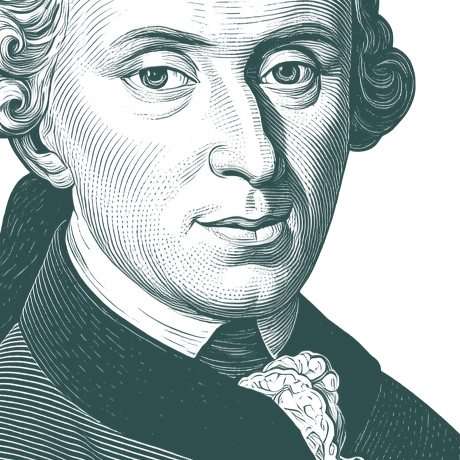
THIRD DEFINITIVE ARTICLE OF PERPETUAL PEACE
III. The rights of men, as citizens of the world, shall be limited to the conditions of universal hospita… - Immanuel Kant
""
THIRD DEFINITIVE ARTICLE OF PERPETUAL PEACE III. The rights of men, as citizens of the world, shall be limited to the conditions of universal hospitality. We are speaking here, as in the previous articles, not of philanthropy, but of right; and in this sphere hospitality signifies the claim of a stranger entering foreign territory to be treated by its owner without hostility. The latter may send him away again if this can be done without causing his death; but, so long as he conducts himself peaceably, he must not be treated as an enemy. It is not a right to be treated as a guest to which the stranger can lay claim-a special friendly compact on his behalf would be required to make him for a given time an actual inmate-but he has a right of visitation. This right to present themselves to society belongs to all mankind in virtue of our common right of possession of the surface of the earth on which, as it is a globe, we cannot be infinitely scattered, and must in the end reconcile ourselves to existence side by side: at the same time, originally no one individual had more right than another to live in any one particular spot.
Denken zonder ervaring is leeg, maar ervaring zonder denken is blind.
[To think for oneself] is the maxim of a reason never passive. The tendency to such passivity, and therefore to heteronomy of reason, is called prejudice; and the greatest prejudice of all is to represent nature as not subject to the rules that the understanding places at its basis by means of its own essential law, i.e. is superstition. Deliverance from superstition is called enlightenment; because although this name belongs to deliverance from prejudices in general, yet superstition especially (in sensu eminenti) deserves to be called a prejudice. For the blindness in which superstition places us, which it even imposes on us as an obligation, makes the need of being guided by others, and the consequent passive state of our reason, peculiarly noticeable.
...[F]reedom... is a property of all rational beings.