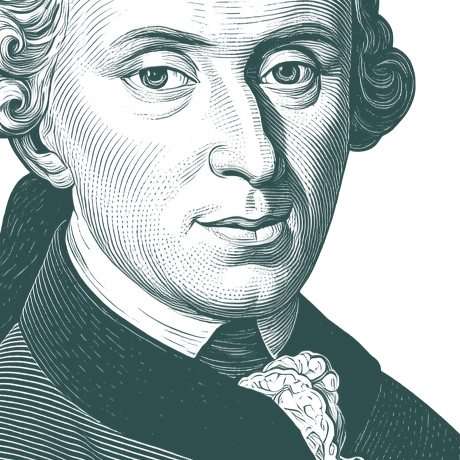
Space is only the form of external intuition, and not a real object that could be perceived externally, nor is it a correlate of phenomena, but the f… - Immanuel Kant

" "

Space is only the form of external intuition, and not a real object that could be perceived externally, nor is it a correlate of phenomena, but the form of phenomena themselves. Space, therefore, cannot exist absolutely (by itself) as something determining the existence of things, because it is no object, but only the form of possible objects. Things, therefore, as phenomenal, may indeed determine space, that is, impart reality to one or other of its predicates (quality and relation); but space, on the other side, as something existing by itself, cannot determine the reality of things in regard to quantity or form, because it is nothing real in itself.

English
Collect this quote

About Immanuel Kant

Immanuel Kant (22 April 1724 – 12 February 1804), born Emanuel Kant, was a German philosopher.

Biography information from Wikiquote

Also Known As

Alternative Names: Kant Emanuel Kant
Works in ChatGPT, Claude, or Any AI

Add semantic quote search to your AI assistant via MCP. One command setup.

Related quotes. More quotes will automatically load as you scroll down, or you can use the load more buttons.

Additional quotes by Immanuel Kant

Reason in a creature is a faculty of widening the rules and purposes of the use of all its powers far beyond natural instinct; it acknowledges no limits to its projects. Reason itself does not work instinctively, but requires trial, practice, and instruction in order gradually to progress from one level of insight to another. Therefore a single man would have to live excessively long in order to learn to make full use of all his natural capacities. Since Nature has set only a short period for his life, she needs a perhaps unreckonable series of generations, each of which passes its own enlightenment to its successor in order finally to bring the seeds of enlightenment to that degree of development in our race which is completely suitable to Nature’s purpose. This point of time must be, at least as an ideal, the goal of man’s efforts, for otherwise his natural capacities would have to be counted as for the most part vain and aimless. This would destroy all practical principles, and Nature, whose wisdom must serve as the fundamental principle in judging all her other offspring, would thereby make man alone a contemptible plaything.

Art is purposiveness without purpose.

Enhance Your Quote Experience

Enjoy ad-free browsing, unlimited collections, and advanced search features with Premium.

[*Footnote: The real morality of actions — their merit or demerit, and even that of our own conduct, is completely unknown to us. Our estimates can relate only to their empirical character. How much is the result of the action of free will, how much is to be ascribed to nature and to blameless error, or to a happy constitution of temperament (merito fortunae), no one can discover, nor, for this reason, determine with perfect justice.]

Loading...