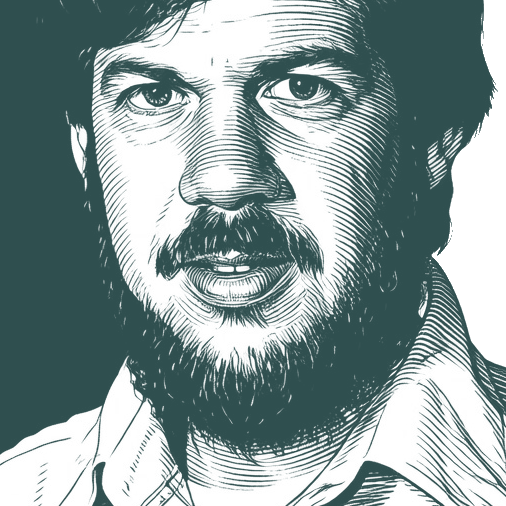
My profession often gets bad press for a variety of sins, both actual and imagined: arrogance, venality, insensitivity to moral issues about the use … - Stephen Jay Gould
""
My profession often gets bad press for a variety of sins, both actual and imagined: arrogance, venality, insensitivity to moral issues about the use of knowledge, pandering to sources of funding with insufficient worry about attendant degradation of values. As an advocate for science, I plead “mildly guilty now and then” to all these charges. Scientists are human beings subject to all the foibles and temptations of ordinary life. Some of us are moral rocks; others are reeds. I like to think (though I have no proof) that we are better, on average, than members of many other callings on a variety of issues central to the practice of good science: willingness to alter received opinion in the face of uncomfortable data, dedication to discovering and publicizing our best and most honest account of nature's factuality, judgment of colleagues on the might of their ideas rather than the power of their positions.
Stephen Jay Gould (September 10, 1941 – May 20, 2002) was an American geologist, paleontologist, evolutionary biologist and popular-science author, who spent most of his career teaching at Harvard University and working at the American Museum of Natural History in New York. He was one of the most influential and widely read writers of popular science of his generation.
Biography information from
Wikiquote·
Portrait adapted from
Wikimedia Commons, Lawrence Lipke (Public domain / CC0)
Misunderstanding of probability may be the greatest of all general impediments to scientific literacy.
The more important the subject in the closer it gets to the bone of our hopes and needs, the more we are likely to err in establishing a framework for analysis. We are story-telling creatures, products of history ourselves. We are fascinated by trends, in part because they tell stories by the basic device of importing directionality to time, in part because they so often supply a moral dimension to a sequence of events.
Go Premium
Support Quotewise while enjoying an ad-free experience and premium features.
As arrogant as I may be in general, I am not sufficiently doltish or vainglorious to imagine that I can meaningfully address the deep philosophical questions embedded within this general inquiry of our intellectual ages — that is, fruitful modes of analysis for the history of human thought. I shall therefore take refuge in an escape route that has traditionally been granted to scientists: the liberty to act as a practical philistine. Instead of suggesting a principled and general solution, I shall ask whether I can specify an operational way to define “Darwinism” (and other intellectual entities) in a manner specific enough to win shared agreement and understanding among readers, but broad enough to avoid the doctrinal quarrels about membership and allegiance that always seem to arise when we define intellectual commitments as pledges of fealty to lists of dogmata (not to mention initiation rites, secret handshakes and membership cards — in short, the intellectual paraphernalia that led Karl Marx to make his famous comment to a French journalist: “je ne suis pas marxiste”).