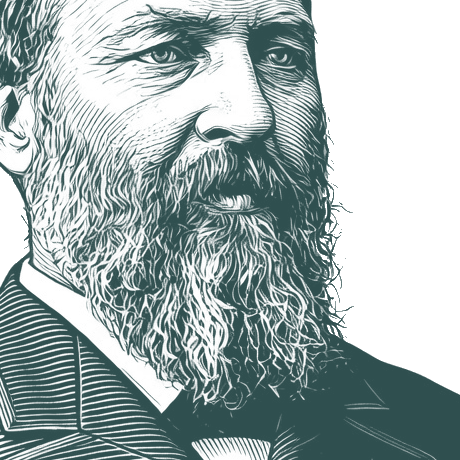
Not in Chicago, in the heat of June, but at the ballot-boxes of the Republic, in the quiet of November, after the silence of deliberate judgment, wil… - James A. Garfield
""
Not in Chicago, in the heat of June, but at the ballot-boxes of the Republic, in the quiet of November, after the silence of deliberate judgment, will this question be settled. And now, gentlemen of the Convention, what do we want?
James Abram Garfield (19 November 1831 – 19 September 1881) was the 20th president of the United States of America in 1881, and the second U.S. president to be assassinated. His term was the second shortest in U.S. history, after William Henry Harrison's. Holding office from March to September of 1881, President Garfield was in office for a total of just six months and fifteen days. A Republican, he supported civil rights and freedoms for African Americans.
Biography information from
Wikiquote·
Portrait adapted from
Wikimedia Commons, Unknown; part of Brady-Handy Photograph Collection. (Public domain / CC0)
Also Known As
Birth Name:
James Abram Garfield
Alternative Names:
James Garfield
•
J. A. Garfield
•
J. Garfield
•
President Garfield
Portrait from Wikimedia Commons. Credit: Unknown; part of Brady-Handy Photograph Collection.. Used under Public domain / CC0. Processed and styled by Quotewise.
Unlimited Quote Collections
Organize your favorite quotes without limits. Create themed collections for every occasion with Premium.
Garfield: "Old boy! Do you think my name will have a place in human history?" Rockwell: "Yes, a grand one, but a grander one in human hearts. Old fellow, you mustn’t talk in that way. You have a great work yet to perform." Garfield: "No. My work is done."