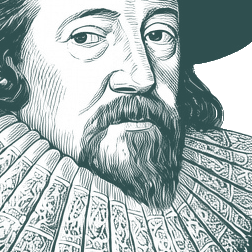
الوقوف على الحياد في الصراع بين القوي والضعيف
لايعني الحياد ولكن يعني الوقوف مع القوي... - Francis Bacon
""
الوقوف على الحياد في الصراع بين القوي والضعيف لايعني الحياد ولكن يعني الوقوف مع القوي...
Arabic
Collect this quote
About
Francis Bacon
Francis Bacon, 1st Viscount St. Alban KC (22 January 1561 – 9 April 1626) was an English philosopher, statesman and essayist. His works argued for the possibility of scientific knowledge based only upon inductive reasoning and careful observation of events in nature. Most importantly, he argued this could be achieved by use of a sceptical and methodical approach whereby scientists aim to avoid misleading themselves. His general idea of the importance and possibility of a skeptical methodology makes Bacon the father of the scientific method. This marked a new turn in the rhetorical and theoretical framework for science, the practical details of which are still central in debates about science and methodology today.
Biography information from
Wikiquote·
Portrait adapted from
Wikimedia Commons, Paul van Somer I / Formerly attributed to Frans Pourbus the Younger (Public domain / CC0)
Also Known As
Alternative Names:
Franciscus Bacon
•
Francis Bacon of Verulamius
•
Francis Bacon, Lord Verulam
•
Bacon, Francis, 1561-1626
•
Francis Bacon, Viscount Saint Alban
Portrait from Wikimedia Commons. Credit: Paul van Somer I / Formerly attributed to Frans Pourbus the Younger. Used under Public domain / CC0. Processed and styled by Quotewise.
Go Premium
Support Quotewise while enjoying an ad-free experience and premium features.
It is a miserable state of mind to have few things to desire and many things to fear. And yet that commonly is the case of kings...
Cato said the best way to keep good acts in memory was to refresh them with new.
Doth any man doubt, that if there were taken out of men's minds vain opinions, flattering hopes, false valuations, imaginations as one would, and the like, but it would leave the minds of a number of men poor shrunken things, full of melancholy and indisposition, and unpleasing to themselves?