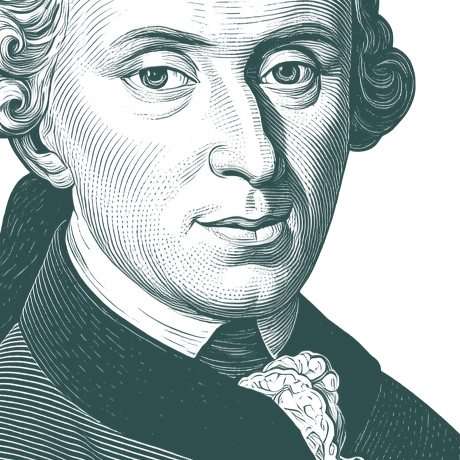
...[T]here is no art in being intelligible if one renounces all thoroughness of insight; but also it produces a disgusting medley of compiled observa… - Immanuel Kant
""
...[T]here is no art in being intelligible if one renounces all thoroughness of insight; but also it produces a disgusting medley of compiled observations and half-reasoned principles. Shallow pates enjoy this because it can be used for everyday chat, but the sagacious find in it only confusion, and being unsatisfied and unable to help themselves, they turn away their eyes, while philosophers, who see quite well through this delusion, are little listened to when they call men off for a time from this pretended popularity in order that they might be rightfully popular after they have attained a definite insight.
We must not, however, begin with theology. The religion which is founded merely on theology can never contain anything of morality. Hence we derive no other feelings from it but fear on the one hand, and hope of reward on the other, and this produces merely a superstitious cult. Morality, then, must come first and theology follow; and that is religion.
The real is not given to us, but put to us by way of a riddle.
Unlimited Quote Collections
Organize your favorite quotes without limits. Create themed collections for every occasion with Premium.
To these spurious principles must be added some others of great affinity with them… First, that by which we assume that everything in the universe is done according to the order of nature, which principle by Epicurus was proclaimed without any restriction, and by all other philosophers unanimously with extremely rare exceptions, not to be admitted but from supreme necessity.