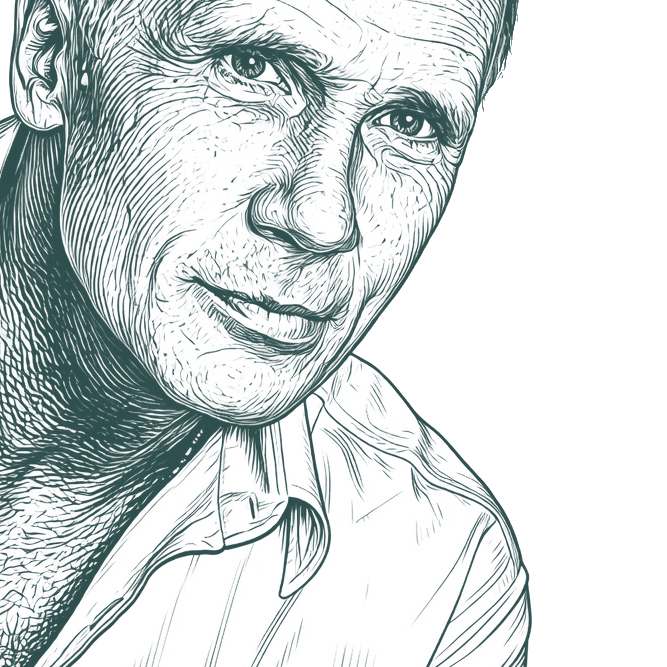
"There are times when you don't belong and you think you're going to kill yourself. Once I went to a hotel. Later that night I made a plan. The plan … - Michael Cunningham

"There are times when you don't belong and you think you're going to kill yourself. Once I went to a hotel. Later that night I made a plan. The plan was I would leave my family when my second child was born. And that's what I did. I got up one morning, made breakfast, went to the bus stop, got on a bus. I'd left a note. I got a job in a library in Canada. It would be wonderful to say you regretted it. It would be easy. But what does it mean? What does it mean to regret when you have no choice? It's what you can bear. There it is. No-one's going to forgive me. It was death. I chose life." -Laura Brown-

English
Collect this quote

About Michael Cunningham

Michael Cunningham (born November 6, 1952) is an American novelist and short story writer. He is best known for his 1998 novel The Hours, which won the Pulitzer Prize for Fiction and the PEN/Faulkner Award in 1999. Cunningham is a senior lecturer of creative writing at Yale University.

Biography information from Wikiquote

Unlimited Quote Collections

Organize your favorite quotes without limits. Create themed collections for every occasion with Premium.

Related quotes. More quotes will automatically load as you scroll down, or you can use the load more buttons.

Additional quotes by Michael Cunningham

I’m not this unusual,” she said. “It’s just my hair.”

She looked at Bobby and she looked at me, with an expression at once disdainful and imploring. She was forty, pregnant, and in love with two men at once. I think what she could not abide was the zaniness of her life. Like many of us, she had grown up expecting romance to bestow dignity and direction.

“Be brave,” I told her. Bobby and I stood before her, confused and homeless and lacking a plan, beset by an aching but chaotic love that refused to focus in the conventional way. Traffic roared behind us. A truck honked its hydraulic horn, a monstrous, oceanic sound. Clare shook her head, not in denial but in exasperation. Because she could think of nothing else to do, she began walking again, more slowly, toward the row of trees.

Outside the house is a world where the shelves are stocked, where radio waves are full of music, where young men walk the streets again, men who have deprievation and a fear worse than death, who have willingly given up their early twenties and now, thinking of thirty and beyond, haven't any time to spare.

PREMIUM FEATURE
Advanced Search Filters

Filter search results by source, date, and more with our premium search tools.

Which is probably one of the reasons those of us who love contemporary fiction love it as we do. We’re alone with it. It arrives without references, without credentials we can trust. Givers of prizes (not to mention critics) do the best they can, but they may — they probably will — be scoffed at by their children’s children. We, the living readers, whether or not we’re members of juries, decide, all on our own, if we suspect ourselves to be in the presence of greatness. We’re compelled to let future generations make the more final decisions, which will, in all likelihood, seem to them so clear as to produce a sense of bafflement over what was valued by their ancestors; what was garlanded and paraded, what carried to the temple on the shoulders of the wise.

Loading...