Limited Time Offer
Premium members can get their quote collection automatically imported into their Quotewise collections.
" "Words can be like X-rays, if you use them properly — they'll go through anything. You read and you're pierced. That's one of the things I try to teach my students — how to write piercingly.
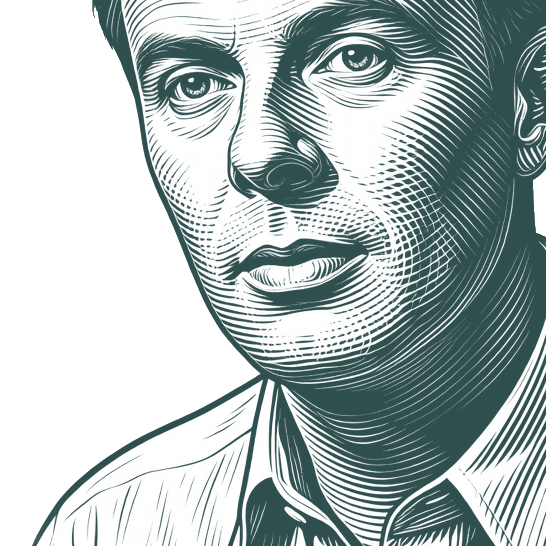
Aldous Leonard Huxley (26 July 1894 – 22 November 1963) was a British author known for his novel Brave New World. He was the grandson of Thomas Henry Huxley and younger brother of Julian Huxley.
Biography information from Wikiquote
Premium members can get their quote collection automatically imported into their Quotewise collections.
Related quotes. More quotes will automatically load as you scroll down, or you can use the load more buttons.
ONE of the evil results of the political subjection of one people by another is that it tends to make the subject nation unnecessarily and excessively conscious of its past. Its achievements in the old great days of freedom are remembered, counted over and exaggerated by a generation of slaves, anxious to convince the world and themselves that they are as good as their masters. Slaves cannot talk of their present greatness, because it does not exist; and prophetic visions of the future are necessarily vague and unsatisfying. There remains the past. Out of the scattered and isolated facts of history it is possible to build up Utopias and Cloud Cuckoo Lands as variously fantastic as the New Jerusalems of prophecy. It is to the past — the gorgeous imaginary past of those whose present is inglorious, sordid, and humiliating — it is to the delightful founded-on-fact romances of history that subject peoples invariably turn. Thus, the savage and hairy chieftains of Ireland became in due course “the Great Kings of Leinster,” “the mighty Emperors of Meath.” Through centuries of slavery the Serbs remembered and idealised the heroes of Kossovo. And for the oppressed Poles, the mediaeval Polish empire was much more powerful, splendid, and polite than the Roman. The English have never been an oppressed nationality; they are in consequence most healthily unaware of their history. They live wholly in the much more interesting worlds of the present — in the worlds of politics and science, of business and industry. So fully, indeed, do they live in the present, that they have compelled the Indians, like the Irish at the other end of the world, to turn to the past. In the course of the last thirty or forty years a huge pseudo-historical literature has sprung up in India, the melancholy product of a subject people’s inferiority complex. Industrious and intelligent men have wasted their time and their abilities in trying to prove that the ancient Hindus were superior to every other people in every activity of life. Thus, each time the West has announced a new scientific discovery, misguided scholars have ransacked Sanskrit literature to find a phrase that might be interpreted as a Hindu anticipation of it. A sentence of a dozen words, obscure even to the most accomplished Sanskrit scholars, is triumphantly quoted to prove that the ancient Hindus were familiar with the chemical constitution of water. Another, no less brief, is held up as the proof that they anticipated Pasteur in the discovery of the microbic origin of disease. A passage from the mythological poem of the Mahabharata proves that they had invented the Zeppelin. Remarkable people, these old Hindus. They knew everything that we know or, indeed, are likely to discover, at any rate until India is a free country; but they were unfortunately too modest to state the fact baldly and in so many words. A little more clarity on their part, a little less reticence, and India would now be centuries ahead of her Western rivals. But they preferred to be oracular and telegraphically brief. It is only after the upstart West has repeated their discoveries that the modern Indian commentator upon their works can interpret their dark sayings as anticipations. On contemporary Indian scholars the pastime of discovering and creating these anticipations never seems to pall. Such are the melancholy and futile occupations of intelligent men who have the misfortune to belong to a subject race. Free men would never dream of wasting their time and wit upon such vanities. From those who have not shall be taken away even that which they have.
Add semantic quote search to your AI assistant via MCP. One command setup.
I have tried to show that the Perennial Philosophy and its ethical corollaries constitute a Highest Common Factor, present in all the major religions of the world. To affirm this truth has never been more imperatively necessary than at the present time. There will never be enduring peace unless and until human beings come to accept a philosophy of life more adequate to the cosmic and psychological facts than the insane idolatries of nationalism and the advertising man's apocalyptic faith in Progress towards a mechanized New Jerusalem. All the elements of this philosophy are present, as we have seen, in the traditional religions. But in existing circumstances there is not the slightest chance that any of the traditional religions will obtain universal acceptance. Europeans and Americans will see no reason for being converted to Hinduism, say, or Buddhism. And the people of Asia can hardly be expected to renounce their own traditions for the Christianity professed, often sincerely, by the imperialists who, for four hundred years and more, have been systematically attacking, exploiting, and oppressing, and are now trying to finish off the work of destruction by “educating” them. But happily there is the Highest Common Factor of all religions, the Perennial Philosophy which has always and everywhere been the metaphysical system of prophets, saints and sages. It is perfectly possible for people to remain good Christians, Hindus, Buddhists, or Moslems and yet to be united in full agreement on the basic doctrines of the Perennial Philosophy.