The fact is that our Union rests upon public opinion and can never be cemented by the blood of its citizens...If it can not live in the affections of… - James Buchanan
""
The fact is that our Union rests upon public opinion and can never be cemented by the blood of its citizens...If it can not live in the affections of its people, it must die.
English
Collect this quote
About
James Buchanan
James Buchanan, Jr. (23 April 1791 – 1 June 1868) was the 15th president of the United States (1857–61), serving immediately prior to the American Civil War. He represented Pennsylvania in the United States House of Representatives and later the Senate, then served as Minister to Russia under President Andrew Jackson. He was named Secretary of State under President James K. Polk, and is to date the last former Secretary of State to serve as President of the United States. After Buchanan turned down an offer to sit on the Supreme Court, President Franklin Pierce appointed him Ambassador to the United Kingdom, in which capacity he helped draft the Ostend Manifesto.
Biography information from
Wikiquote·
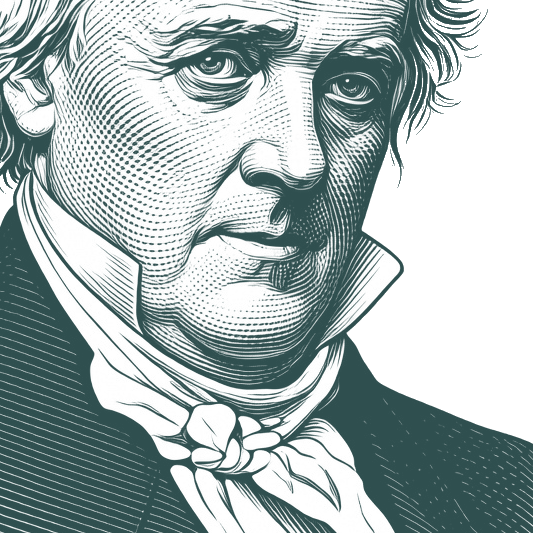
Portrait adapted from
Wikimedia Commons, From Brady daguerreotype (Mathew Brady) (1822-1896) (Public domain / CC0)
Also Known As
Birth Name:
James Buchanan, Jr.
Alternative Names:
J. Buchanan, Jr.
•
J. Buchanan
•
President Buchanan
Portrait from Wikimedia Commons. Credit: From Brady daguerreotype (Mathew Brady) (1822-1896). Used under Public domain / CC0. Processed and styled by Quotewise.
Limited Time Offer
Premium members can get their quote collection automatically imported into their Quotewise collections.
I am now ‘solitary and alone,’ having no companion in the house with me. I have gone a wooing to several gentlemen, but have not succeeded with any one of them. I feel that it is not good for man to be alone; and should not be astonished to find myself married to some old maid who can nurse me when I am sick, provide good dinners for me when I am well, and not expect from me any very ardent or romantic affection.
I am the last President of the United States!
Limited Time Offer
Premium members can get their quote collection automatically imported into their Quotewise collections.