But 'why then publish?' There are no rewards
Of fame or profit when the world grows weary.
I ask in turn why do you play at cards?
Why drink? Why rea… - Lord Byron
""
But 'why then publish?' There are no rewards Of fame or profit when the world grows weary. I ask in turn why do you play at cards? Why drink? Why read? To make some hour less dreary. It occupies me to turn back regards On what I've seen or pondered, sad or cheery, And what I write I cast upon the stream To swim or sink. I have had at least my dream.
George Gordon (Noel) Byron, 6th Baron Byron (January 22 1788 – April 19 1824), generally known as Lord Byron, was an English poet and leading figure in Romanticism. He was the father of the mathematician Ada Lovelace.
Biography information from
Wikiquote·
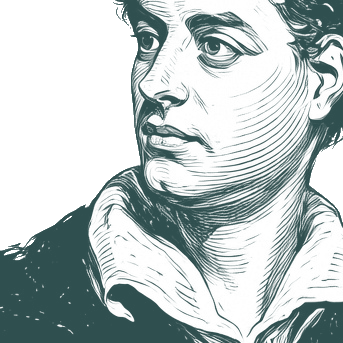
Portrait adapted from
Wikimedia Commons, Thomas Phillips (Public domain / CC0)
Also Known As
Birth Name:
George Gordon Byron
Alternative Names:
George Gordon Byron, 6th Baron Byron
•
Noel Byron
•
George Gordon Byron Lord
•
George Gordon Byron, 6th Lord Byron
As the Liberty lads o'er the sea Bought their freedom, and cheaply, with blood So we, boys, we Will die fighting, or live free, And down with all kings but King Ludd
Who knows whether, when a comet shall approach this globe to destroy it, as it often has been and will be destroyed, men will not tear rocks from their foundations by means of steam, and hurl mountains, as the giants are said to have done, against the flaming mass? - and then we shall have traditions of Titans again, and of wars with Heaven...
PREMIUM FEATURE
Advanced Search Filters
Filter search results by source, date, and more with our premium search tools.
Near this Spot are deposited the Remains of one who possessed Beauty without Vanity, Strength without Insolence, Courage without Ferocity, and all the virtues of Man without his Vices.
This praise, which would be unmeaning Flattery if inscribed over human Ashes, is but a just tribute to the Memory of Boatswain, a Dog who was born in Newfoundland May 1803 and died at Newstead Nov. 18th, 1808
When some proud Son of Man returns to Earth, Unknown to Glory, but upheld by Birth, The sculptor’s art exhausts the pomp of woe, And storied urns record who rests below. When all is done, upon the Tomb is seen, Not what he was, but what he should have been. But the poor Dog, in life the firmest friend, The first to welcome, foremost to defend, Whose honest heart is still his Master’s own, Who labours, fights, lives, breathes for him alone, Unhonoured falls, unnoticed all his worth, Denied in heaven the Soul he held on earth – While man, vain insect! hopes to be forgiven, And claims himself a sole exclusive heaven.
Oh man! thou feeble tenant of an hour, Debased by slavery, or corrupt by power – Who knows thee well, must quit thee with disgust, Degraded mass of animated dust! Thy love is lust, thy friendship all a cheat, Thy tongue hypocrisy, thy heart deceit! By nature vile, ennobled but by name, Each kindred brute might bid thee blush for shame. Ye, who behold perchance this simple urn, Pass on – it honours none you wish to mourn. To mark a friend’s remains these stones arise; I never knew but one — and here he lies.