Are you really surprised by the endurance of religion? What ideology is likely to be more durable than one that conforms, at every turn, to our power… - Sam Harris
""
Are you really surprised by the endurance of religion? What ideology is likely to be more durable than one that conforms, at every turn, to our powers of wishful thinking? Hope is easy; knowledge is hard. Science is the one domain in which we human beings make a truly heroic effort to counter our innate biases and wishful thinking. Science is the one endeavor in which we have developed a refined methodology for separating what a person hopes is true from what he has good reason to believe. The methodology isn't perfect, and the history of science is riddled with abject failures of scientific objectivity. But that is just the point-these have been failures of science, discovered and corrected by-what, religion? No, by good science.
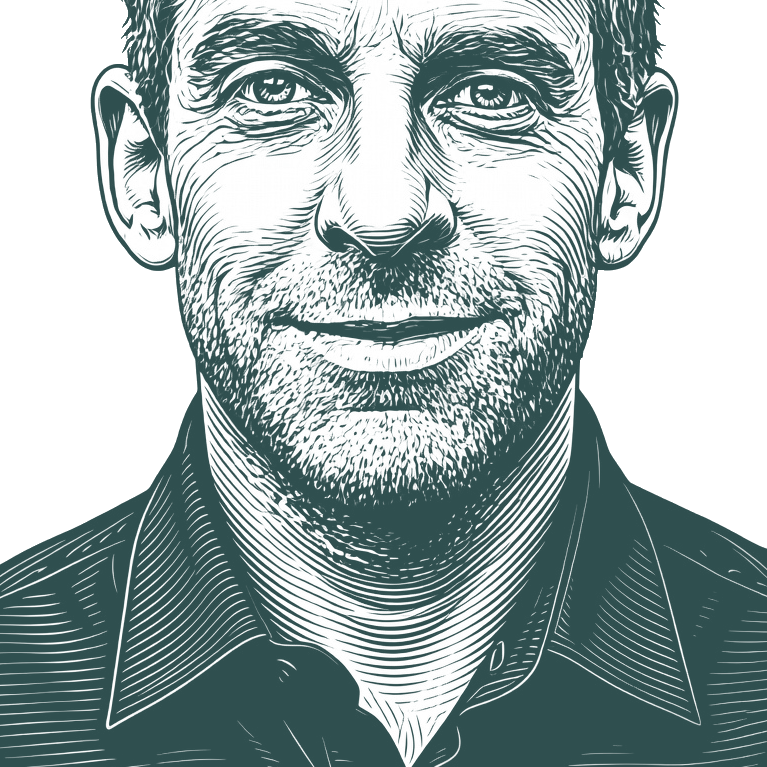
Samuel Benjamin Harris (born April 9, 1967) is an American author, philosopher, public intellectual, and neuroscientist, as well as the co-founder and CEO of Project Reason. He is the author of The End of Faith (2004), which won the PEN/Martha Albrand Award for First Nonfiction in 2005 and appeared on The New York Times best seller list for 33 weeks, Letter to a Christian Nation (2006), The Moral Landscape (2010), Lying (2011), Free Will (2012), and most recently Waking Up: A Guide to Spirituality Without Religion (2014).
Biography information from
Wikiquote·
Portrait adapted from
Wikimedia Commons, Cmichel67 (Christopher Michel) (CC BY-SA)
Harris: Yes. In fact, self-deception might have paid evolutionary dividends in other ways. Robert Trivers argues, for instance, that people who can believe their own lies turn out to be the best liars of all — and an ability to deceive rivals has obvious advantages in the state of nature. Now, clearly many things may have been adaptive for our ancestors — such as tribal warfare, rape, xenophobia — that we now deem unethical and would never want to defend. But I’m wondering if you see any possibility that a social system that maximizes truth-telling could be one that fails to maximize the well-being of all participants. Is it possible that some measure of deception is good for us?
If Jesus does come down out of the clouds like a superhero, Christianity will stand revealed as a science. That will be the science of Christianity.
If our well-being depends upon the interaction between events in our brains and events in the world, and there are better and worse ways to secure it, then some cultures will tend to produce lives that are more worth living than others; some political persuasions will be more enlightened than others; and some world views will be mistaken in ways that cause needless human misery.