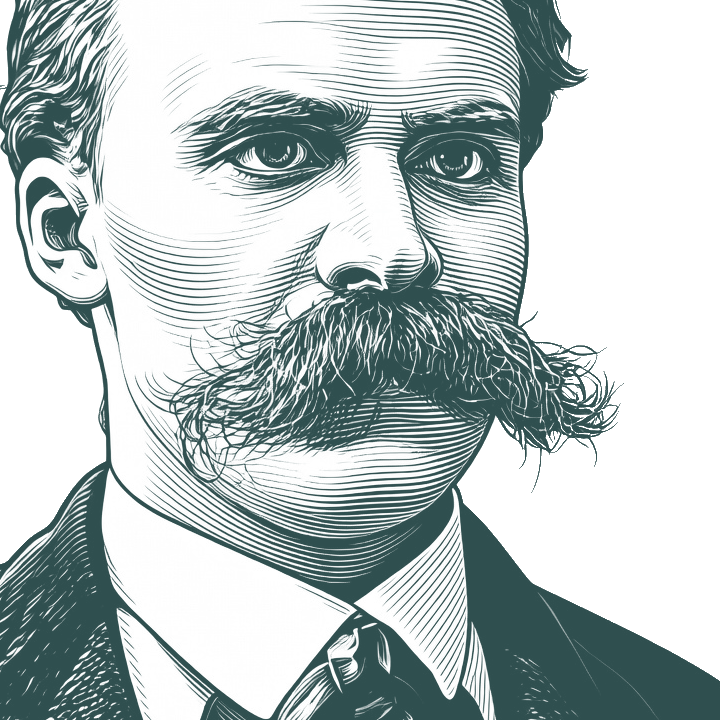
Friedrich Wilhelm Nietzsche (15 October 1844 – 25 August 1900) was a German philosopher, cultural critic, composer, poet, writer, and philologist whose work has exerted a profound influence on modern intellectual history. His critiques of contemporary culture, religion, and philosophy centered on a basic question regarding the foundation of values and morality.
Biography information from
Wikiquote·
Portrait adapted from
Wikimedia Commons, Friedrich Hermann Hartmann (Public domain / CC0)
Also Known As
Alternative Names:
Friedrich Wilhelm Nietzsche
•
Nietzsche
The happiness of man is: I will. The happiness of woman is: he wills. ‘Behold, just now the world became perfect!’ — thus thinks every woman when she obeys out of entire love. And women must obey and find a depth for her surface. Surface is the disposition of woman: a mobile, stormy film over shallow water. Man’s disposition, however, is deep; his river roars in subterranean caves: woman feels his strength but does not comprehend it.
One must be born to any superior world — to make it plainer, one must be bred for it. One has a right to philosophy (taking the word in its greatest sense) only by virtue of one's breeding; one's ancestors, one's "blood," decides this, too. Many generations must have worked on the origin of a philosopher; each one of his virtues must have been separately earned, cared for, passed on, and embodied.
Try QuoteGPT
Chat naturally about what you need. Each answer links back to real quotes with citations.
And if you gaze for long into an abyss, the abyss gazes also into you.