The mellow autumn came, and with it came
The promised party, to enjoy its sweets.
The corn is cut, the manor full of game;
The pointer ranges, and th… - Lord Byron
""
The mellow autumn came, and with it came The promised party, to enjoy its sweets. The corn is cut, the manor full of game; The pointer ranges, and the sportsman beats In russet jacket; — lynx-like is his aim; Full grows his bag, and wonderful his feats. Ah, nutbrown partridges! Ah, brilliant pheasants! And ah, ye poachers! — 'Tis no sport for peasants.
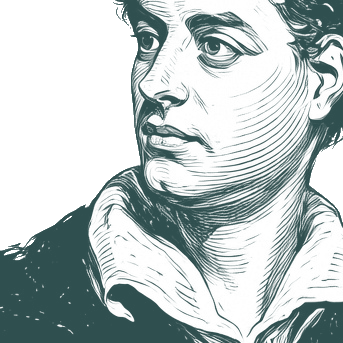
George Gordon (Noel) Byron, 6th Baron Byron (January 22 1788 – April 19 1824), generally known as Lord Byron, was an English poet and leading figure in Romanticism. He was the father of the mathematician Ada Lovelace.
Biography information from
Wikiquote·
Portrait adapted from
Wikimedia Commons, Thomas Phillips (Public domain / CC0)
Also Known As
Birth Name:
George Gordon Byron
Alternative Names:
George Gordon Byron, 6th Baron Byron
•
Noel Byron
•
George Gordon Byron Lord
•
George Gordon Byron, 6th Lord Byron
Man's love is of man's life a thing apart, 'Tis woman's whole existence.
But I, who am of lighter mood, Will laugh to flee away.' For who would trust the seeming sighs Of wife or paramour?
Darkness:
I had a dream, which was not all a dream. The bright sun was extinguish'd, and the stars Did wander darkling in the eternal space, Rayless, and pathless, and the icy earth Swung blind and blackening in the moonless air; Morn came and went — and came, and brought no day, And men forgot their passions in the dread Of this their desolation; and all hearts Were chill'd into a selfish prayer for light: And they did live by watchfires — and the thrones, The palaces of crowned kings — the huts, The habitations of all things which dwell, Were burnt for beacons; cities were consum'd, And men were gather'd round their blazing homes To look once more into each other's face; Happy were those who dwelt within the eye Of the volcanos, and their mountain-torch: A fearful hope was all the world contain'd; Forests were set on fire — but hour by hour They fell and faded — and the crackling trunks Extinguish'd with a crash — and all was black. The brows of men by the despairing light Wore an unearthly aspect, as by fits The flashes fell upon them; some lay down And hid their eyes and wept; and some did rest Their chins upon their clenched hands, and smil'd; And others hurried to and fro, and fed Their funeral piles with fuel, and look'd up With mad disquietude on the dull sky, The pall of a past world; and then again With curses cast them down upon the dust, And gnash'd their teeth and howl'd: the wild birds shriek'd And, terrified, did flutter on the ground, And flap their useless wings; the wildest brutes Came tame and tremulous; and vipers crawl'd And twin'd themselves among the multitude, Hissing, but stingless — they were slain for food. And War, which for a moment was no more, Did glut himself again: a meal was bought With blood, and each sate sullenly apart Gorging himself in gloom: no love was left; All earth was but one thought — and that was death Immediate and inglorious; and the pang Of famine fed upon all entrails — men Died, and their bones were tombless as th