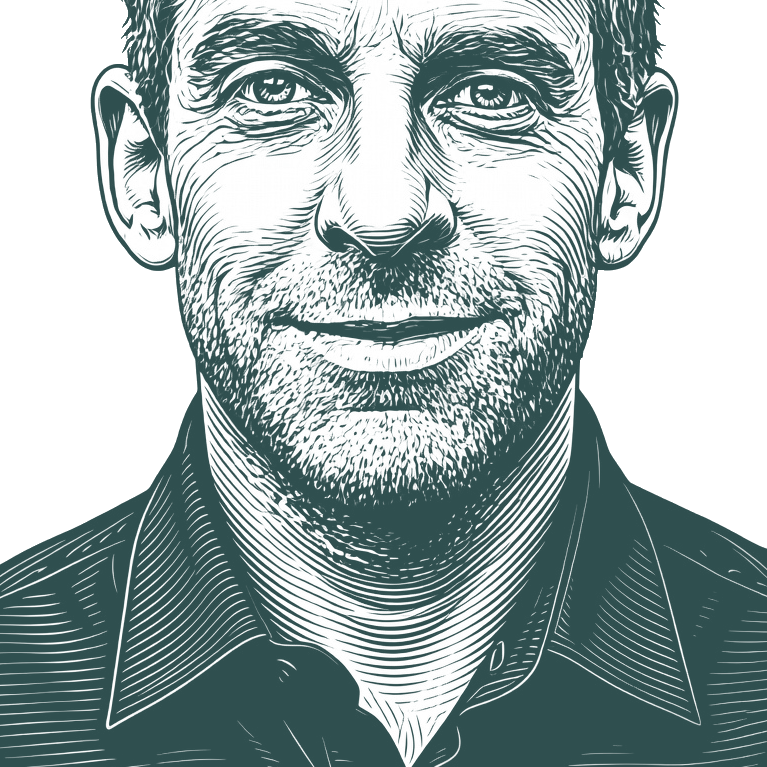
Everything we do is for the purpose of altering consciousness. We form friendships so that we can feel love and avoid loneliness…. We read for the pl… - Sam Harris
""
Everything we do is for the purpose of altering consciousness. We form friendships so that we can feel love and avoid loneliness…. We read for the pleasure of thinking another person's thoughts. Every waking moment, and even in our dreams, we struggle to direct the flow of sensation, emotion, and cognition towards states of consciousness that we value.
Samuel Benjamin Harris (born April 9, 1967) is an American author, philosopher, public intellectual, and neuroscientist, as well as the co-founder and CEO of Project Reason. He is the author of The End of Faith (2004), which won the PEN/Martha Albrand Award for First Nonfiction in 2005 and appeared on The New York Times best seller list for 33 weeks, Letter to a Christian Nation (2006), The Moral Landscape (2010), Lying (2011), Free Will (2012), and most recently Waking Up: A Guide to Spirituality Without Religion (2014).
Biography information from
Wikiquote·
Portrait adapted from
Wikimedia Commons, Cmichel67 (Christopher Michel) (CC BY-SA)
While moderation in religion may seem a reasonable position to stake out, in light of all that we have (and have not) learned about the universe, it offers no bulwark against religious extremism and religious violence. From the perspective of those seeking to live by the letter of texts, the religious moderate is nothing more than a failed fundamentalist. He is, in all likelihood, going to wind up in hell with the rest of the unbelievers. The problem that religious moderation poses for all of us is that it does not permit anything very critical to be said about religious literalism. We cannot say that fundamentalists are crazy, because they are merely practicing their freedom of belief; we cannot even say that they are mistaken in religious (italicized) terms, because their knowledge of scripture is generally unrivaled. All we can say, as religious moderates, is that we don't like the personal and social costs that a full embrace of scripture imposes on us. This is not a new form of faith, or even a new species of scriptural exegesis; it is simply a capitulation to a variety of all-too-human interests that have nothing, in principle, to do with God. Religious moderation is the product of secular knowledge and scriptural ignorance (italicized) — and it has no bona fides, in religious terms, to put it on par with fundamentalism. The texts themselves are unequivocal: they are perfect in all their parts. By their light, religious moderation appears to be nothing more than an unwillingness to fully submit to God's law. By failing to live by the letter of the texts, while tolerating the irrationality of those who do, religious moderates betray faith and reason equally. Unless the core dogmas of faith are called into question — i.e., that we know there is a God, and that we know what he wants from us — religious moderation will do nothing to lead us out of the wilderness.
Religious moderation is the direct result of taking scripture less and less seriously. So why not take it less seriously still? Why not admit the the Bible is merely a collection of imperfect books written by highly fallible human beings.
Works in ChatGPT, Claude, or Any AI
Add semantic quote search to your AI assistant via MCP. One command setup.
If you pay attention to your inner life, you will see that the emergence of choices, efforts, and intentions is a fundamentally mysterious process. Yes, you can decide to go on a diet — and we know a lot about the variables that will enable you to stick to it — but you cannot know why you were finally able to adhere to this discipline when all your previous attempts failed. You might have a story to tell about why things were different this time around, but it would be nothing more than a post hoc description of events that you did not control. Yes, you can do what you want — but you cannot account for the fact that your wants are effective in one case and not in another (and you certainly can’t choose your wants in advance). You wanted to lose weight for years. Then you really wanted to. What’s the difference? Whatever it is, it’s not a difference that you brought into being.