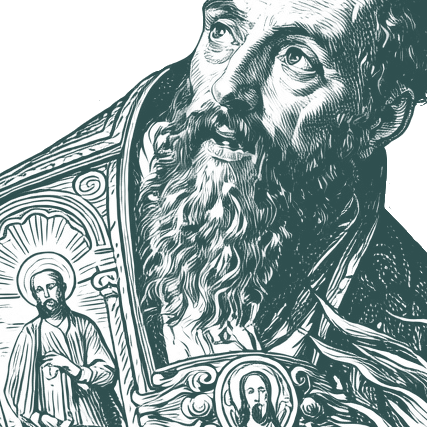
It is not reason which turns the young man from God; it is the flesh. Skepticism but provides him with the excuses for the new life he is leading. - Augustine of Hippo
""
It is not reason which turns the young man from God; it is the flesh. Skepticism but provides him with the excuses for the new life he is leading.
St. Augustine of Hippo (13 November 354 – 28 August 430) was a Christian theologian, rhetor, North African bishop, Doctor of the Catholic Church, saint, and a philosopher influenced in his early years by Manichaeism and the Neo-Platonism of Plotinus.
Biography information from
Wikiquote·
Portrait adapted from
Wikimedia Commons, Philippe de Champaigne (Public domain / CC0)
Also Known As
Native Name:
Aurelius Augustinus
Alternative Names:
Saint Augustine
•
Saint Austin
•
Augustine
•
St. Augoustinos
•
St. Augustine of Hippo
•
Aurelius Augustine
•
Aurelius Augustinus Hipponensis
•
St. Augustine
•
Augustinus
•
Saint Augustine of Hippo
•
Augustinus, Aurelius
•
bishop of Hippo
But what do I love, when I love You? Not beauty of bodies, nor the fair harmony of time. Not the brightness of the light, so welcome to our eyes, Nor sweet melodies of varied songs, Nor the fragrant smell of flowers, and ointments and spices. Not manna and honey, nor the embrace of arms in fleshly pleasure. None of these I love when I love my God. Yet this love is a kind of light and melody and fragrance and meat and embrace. When I love my God, the light, melody, fragrance, meat, and embrace is experienced by my inner man. Love shines into my soul, where space cannot contain it. Love speaks with sound that does not fade into silence with time. Its smells are not dispersed in breath, and its tastes do not grow stale. Love clings, and its satisfaction does not break my connection to the experience. This is it which I love, when I love my God.
What did it profit that I read the greatest human ideas of the so-called “liberal arts” in the books I got hold of. My thinking was enslaved to corrupt desires, so what difference did it make that I could read and understand these books? I delighted in learning, but I had no divine context for what my mind picked up. I had no foundation to discern what is true or certain. I was standing with my back to the light, so that the things that should be illuminated were in shadow, even though they were in front of my face.
Limited Time Offer
Premium members can get their quote collection automatically imported into their Quotewise collections.