The doctrine of the Second Coming teaches us that we do not and cannot know when the world drama will end. The curtain may be rung down at any moment… - C. S. Lewis
""
The doctrine of the Second Coming teaches us that we do not and cannot know when the world drama will end. The curtain may be rung down at any moment: say, before you have finished reading this paragraph.
English
Collect this quote
About
C. S. Lewis
Clive Staples Lewis (29 November 1898 – 22 November 1963) was an Irish author, scholar of medieval literature, and Christian apologist. He is best known for his essays on Christianity and for the children's fantasy series The Chronicles of Narnia.
Biography information from
Wikiquote·
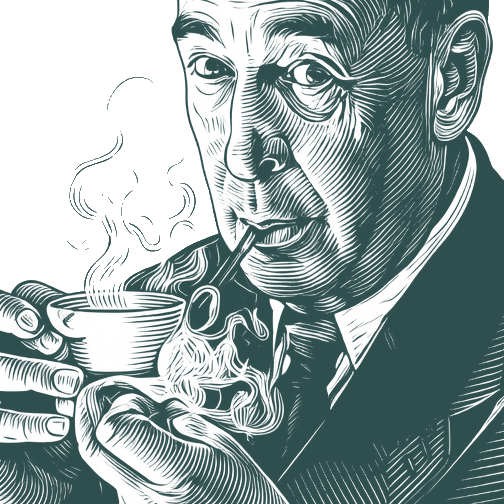
Portrait adapted from
Wikimedia Commons, John S. Murray (Public domain / CC0)
Also Known As
Pen Names:
N. W. Clerk
•
Clive Hamilton
Birth Name:
Clive Staples Lewis
Alternative Names:
CS Lewis
•
C.S. Lewis
•
Clive Lewis
•
Nat Whilk
The human spirit will not even begin to try to surrender self-will as long as all seems to be well with it. Now error and sin both have this property, that the deeper they are the less their victim suspects their existence; they are masked evil. Pain is unmasked, unmistakable evil; every man knows that something is wrong when he is being hurt.
The Christian is in a different position from other people who are trying to be good. They hope, by being good, to please God if there is one; or—if they think there is not—at least they hope to deserve approval from good men. But the Christian thinks any good he does comes from the Christ-life inside him. He does not think God will love us because we are good, but that God will make us good because He loves us; just as the roof of a greenhouse does not attract the sun because it is bright, but becomes bright because the sun shines on it.
There is no spiritual sustenance in flat equality. It is a dim recognition of this fact which makes much of our political propaganda sound so thin. We are trying to be enraptured by something which is merely the negative condition of the good life. That is why the imagination of people is so easily captured by appeals to the craving for inequality, whether in a romantic form of films about loyal courtiers or in the brutal form of Nazi ideology. The tempter always works on some real weakness in our own system of values — offers food to some need which we have starved.