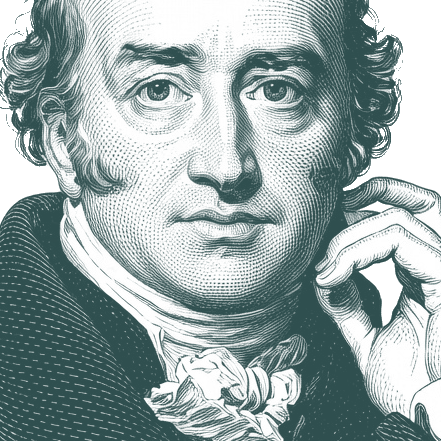
I do not envy that man's feelings, who can behold the sufferings of Switzerland, and who derives from that sight no idea of what is meant by the deli… - George Canning
""
I do not envy that man's feelings, who can behold the sufferings of Switzerland, and who derives from that sight no idea of what is meant by the deliverance of Europe. I do not envy the feelings of that man, who can look without emotion at Italy,—plundered, insulted, trampled upon, exhausted, covered with ridicule, and horror, and devastation;—who can look at all this, and be at a loss to guess what is meant by the deliverance of Europe? As little do I envy the feelings of that man, who can view the peoples of the Netherlands driven into insurrection, and struggling for their freedom against the heavy hand of a merciless tyranny, without entertaining any suspicion of what may be the sense of the word deliverance. Does such a man contemplate Holland groaning under arbitrary oppressions and exactions? Does he turn his eyes to Spain trembling at the nod of a foreign master? And does the word deliverance still sound unintelligibly in his ear? Has he heard of the rescue and salvation of Naples, by the appearance and the triumphs of the British fleet? Does he know that the monarchy of Naples maintains its existence at the sword's point? And is his understanding, and his heart, still impenetrable to the sense and meaning of the deliverance of Europe?
George Canning (11 April 1770 – 8 August 1827) was a British Tory statesman. He held various senior cabinet positions under numerous prime ministers, including two important terms as Foreign Secretary, finally becoming Prime Minister of the United Kingdom for the last 118 days of his life, from April to August 1827.
Portrait adapted from
Wikimedia Commons, After Thomas Lawrence (Public domain / CC0)
[T]here is one way of considering what is advantageous to this country, to which I confess I am very partial; and the rather, perhaps, because it does not fall in with the new and fashionable philosophy of the day. I know it is a doctrine of that large and liberal system of ethics which has of late been introduced into the world, and which has superseded all the narrow prejudices of the ancient school,—that we are to consider not so much what is good for our country, as what is good for the human race; that we are all children of one large family;—and I know not what other fancies and philanthropics, which I must take shame to myself for not being able to comprehend. I, for my part, still conceive it to be the paramount duty of a British member of parliament, to consider what is good for Great Britain.
As to this Country—though I am not so enthusiastically attached to the beauties of its constitution, and still less so determinedly blind to its defects, as to believe it unimproveable—yet I do think it by much the best practical Government that the world has ever seen—that of America perhaps excepted, and of that indeed it is not quite fair yet to form a decided opinion—I do think it almost impossible to begin improving now, without a risque of being hurried beyond all limits of prudence and happiness, and I do feel such a horror of the 1st. and 2nd. of Septr., and such a distrust of impossibility of erecting and preserving a purer form of Government among a refined, that is to say a corrupt, people, that I cannot but hold it to be the duty of myself and of every other man, according to their respective ability and opportunity, to resist by every honest and prudent exertion any attempt that may be made to assimilate the state of this country in theory or in practice to that of France. And I would resign therefore for the present any propensity that I might entertain to reform—for the sake of securing the existence of the State, till such time as it may set about reforming itself without danger of total confusion.
Works in ChatGPT, Claude, or Any AI
Add semantic quote search to your AI assistant via MCP. One command setup.
Give me the avowed, the erect, the manly foe, Bold I can meet,—perhaps may turn his blow! But of all plagues, good Heaven, thy wrath can send, Save, save, oh save me from the candid friend!