The characteristics of the affective experience which, to avoid ambiguity, should, I think, be called the state of assurance rather than the faith-st… - William James
""
The characteristics of the affective experience which, to avoid ambiguity, should, I think, be called the state of assurance rather than the faith-state, can be easily enumerated, though it is probably difficult to realize their intensity, unless one has been through the experience one's self. The central one is the loss of all the worry, the sense that all is ultimately well with one, the peace, the harmony, the willingness to be, even though the outer conditions should remain the same. The certainty of God's 'grace,' of 'justification,' 'salvation,' is an objective belief that usually accompanies the change in Christians; but this may be entirely lacking and yet the affective peace remain the same — you will recollect the case of the Oxford graduate: and many might be given where the assurance of personal salvation was only a later result. A passion of willingness, of acquiescence, of admiration, is the glowing centre of this state of mind. The second feature is the sense of perceiving truths not known before. The mysteries of life become lucid, as Professor Leuba says; and often, nay usually, the solution is more or less unutterable in words. But these more intellectual phenomena may be postponed until we treat of mysticism. A third peculiarity of the assurance state is the objective change which the world often appears to undergo. 'An appearance of newness beautifies every object,' the precise opposite of that other sort of newness, that dreadful unreality and strangeness in the appearance of the world, which is experienced by melancholy patients, and of which you may recall my relating some examples. This sense of clean and beautiful newness within and without one is one of the commonest entries in conversion records.
English
Collect this quote
About
William James
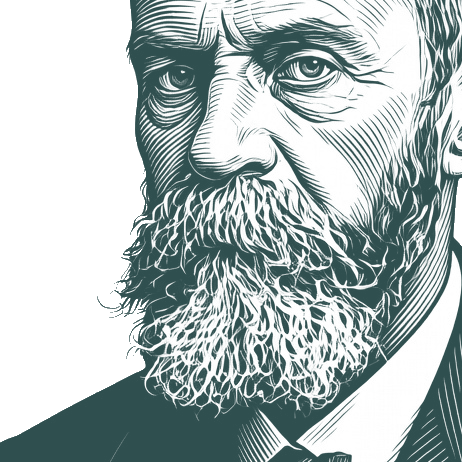
William James (11 January 1842 – 26 August 1910) was a pioneering American psychologist and philosopher. He developed the philosophical perspective known as radical empiricism, and wrote influential books on the science of psychology, the psychology of religious experience and mysticism, and the philosophy of pragmatism.
Biography information from
Wikiquote·
Portrait adapted from
Wikimedia Commons, Alice Boughton (Public domain / CC0)
Where [God] is, tragedy is only provisional and partial, and shipwreck and dissolution are not the absolutely final things.
What right have we to believe Nature under any obligation to do her work by means of complete minds only? She may find an incomplete mind a more suitable instrument for a particular purpose.
Try QuoteGPT
Chat naturally about what you need. Each answer links back to real quotes with citations.