But where should he begin? - Well, then, the trouble with the English was their:
Their:
In a word, Gibreel solemnly pronounced, their weather.
Gib… - Salman Rushdie
""
But where should he begin? - Well, then, the trouble with the English was their:
Their:
In a word, Gibreel solemnly pronounced, their weather.
Gibreel Farishta floating on his cloud formed the opinion that the moral fuzziness of the English was meteorologically induced. 'When the day is not warmer than the night,' he reasoned, 'when the light is not brighter than the dark, when the land is not drier than the sea, then clearly a people will lose the power to make distinctions, and commence to see everything - from political parties to sexual partners to religious beliefs - as much-the-same, nothing-to-choose, give-or-take. What folly! For truth is extreme, it is so and not thus, it is him and not her; a partisan matter, not a spectator sport. It is, in brief, heated. City,' he cried, and his voice rolled over the metropolis like thunder, 'I am going to tropicalize you.'
Gibreel enumerated the benefits of the proposed metamorphosis of London into a tropical city: increased moral definition, institution of a national siesta, development of vivid and expansive patterns of behaviour among the populace, higher-quality popular music, new birds in the trees (macaws, peacocks, cockatoos), new trees under the birds (coco-palms, tamarind, banyans with hanging beards). Improved street-life, outrageously coloured flowers (magenta, vermilion, neon-green), spider-monkeys in the oaks. A new mass market for domestic air-conditioning units, ceiling fans, anti-mosquito coils and sprays. A coir and copra industry. Increased appeal of London as a centre for conferences, etc.: better cricketeers; higher emphasis on ball-control among professional footballers, the traditional and soulless English commitment to 'high workrate' having been rendered obsolete by the heat. Religious fervour, political ferment, renewal of interest in the intellegentsia. No more British reserve; hot-water bottles to be banished forever, replaced in the foetid nights by the making of slow and odorous love.
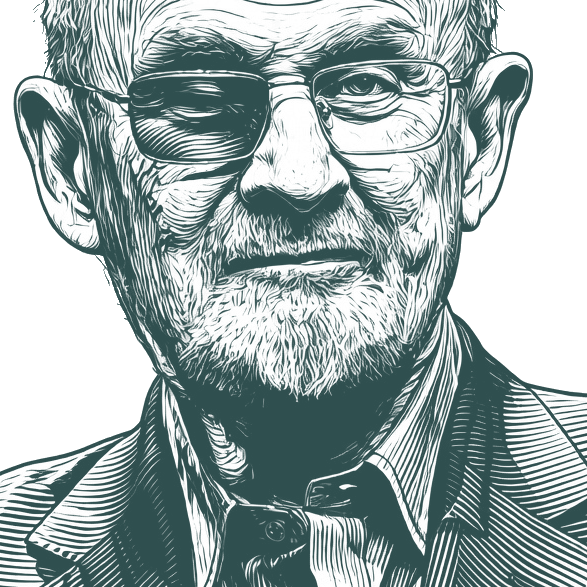
Sir Salman Rushdie (born Ahmed Salman Rushdie, Urdu: أحمد سلمان رشدی, Hindi: अह्मद सलमान रश्डी on 19 June 1947) is an Indian-born British novelist and essayist. Most of his work is set on the Indian subcontinent.
Biography information from
Wikiquote·
Portrait adapted from
Wikimedia Commons, Elena Ternovaja (CC BY-SA)
Also Known As
Native Name:
سلمان رُشدی
•
سلمان رشدی
Alternative Names:
Sir Ahmed Salman Rushdie
•
Rushdie
•
Ahmed Salman Rushdie
•
Joseph Anton
I was born in the city of Bombay ... once upon a time. No, that won't do, there's no getting away from the date: I was born in Doctor Narlikar's Nursing Home on August 15th, 1947. And the time? The time matters, too. Well then: at night. No, it's important to be more ... On the stroke of midnight, as a matter of fact. Clock-hands joined palms in respectful greeting as I came. Oh, spell it out, spell it out: at the precise instant of India's arrival at independence, I tumbled forth into the world.
He knew that his father had finally run hard enough and long enough to wear down the frontiers between the worlds, he had run clear out of his skin and into the arms of his wife, to whom he had proved, once and for all, the superiority of his love. Some migrants are happy to depart.
If I were asked for a one-sentence sound bite on religion, I would say I was against it.