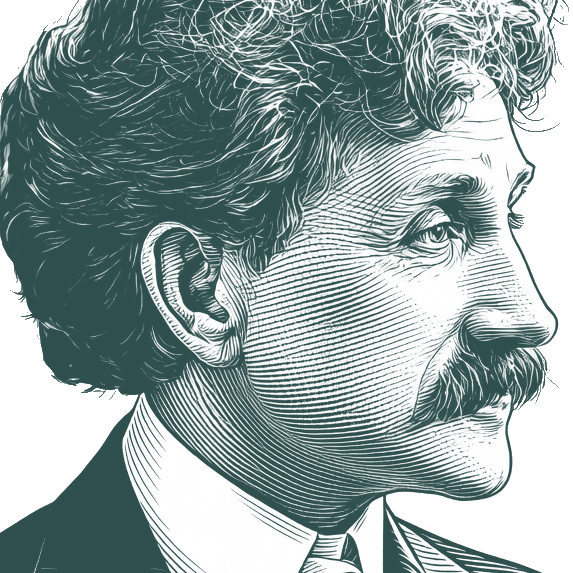
One thing is certain, however, and that is, that the most powerful instinct of human nature, the instinct to struggle and survive, the instinct to be… - J. Howard Moore
""
One thing is certain, however, and that is, that the most powerful instinct of human nature, the instinct to struggle and survive, the instinct to be superior, must be destroyed or greatly subordinated before the state here outlined can be realized; for the ideal state will be practically bereft of opportunity for its satisfaction.
English
Collect this quote
About
J. Howard Moore
John Howard Moore (December 4, 1862 – June 17, 1916) was an American zoologist, philosopher, educator and social reformer. He advocated for the ethical consideration and treatment of animals and authored several articles, books, essays and pamphlets on topics including education, ethics, evolutionary biology, humanitarianism, utilitarianism and vegetarianism. He is best known for his work The Universal Kinship (1906), which advocated for a secular sentiocentric philosophy he called the doctrine of "Universal Kinship", based on the shared evolutionary kinship between all sentient beings.
Men have had the same origin as other animals; they have the same general architecture of body and mind; and they have the same destiny. And they stand on the same general level of ethical claim and obligation.
The well being of others is on an average as important as our own, and should as a general thing be appraised at the same value. If a certain amount of happiness is scheduled to fall to the lot of the earth, it makes absolutely no difference whether it falls on me, or on you, or on somebody a thousand miles away. It would serve the ends of absolute ethics quite as well if it fell on an insect or a horse as if it fell on a man. The only important thing from the standpoint of universal good is that the pleasure be experienced. It is not important what particular individual or species is the beneficiary. It might even go to another world, and be just as satisfactory to a universal well-wisher, who looked at Cosmos from the serene altitudes of pure reason, without any prejudices whatever one way or another in the matter. This is the ideal. It is a long, long way from our natures. But only in so far as we approximate this ideal do we rise above those imperfections of our being which have been ground out by the methods that have operated in the development of life on earth.
Unlimited Quote Collections
Organize your favorite quotes without limits. Create themed collections for every occasion with Premium.
Sometimes, in our littleness, we boast of the progress we have made, and of the knowledge, culture, and art which we as a race to-day display. But, O, it is the vanity of Adolescence. What will the knowledge, culture, and art of to-day amount to fifty or a hundred thousand years from now?—or a million years from now? Nothing! This sphere, with its clinging tenantry, will still be here then and will still be making its annual journeys round the sun, as now. But, O, what mighty and ineffable changes! The things of to-day will be so rude and childish and so far away that they will not even be considered.