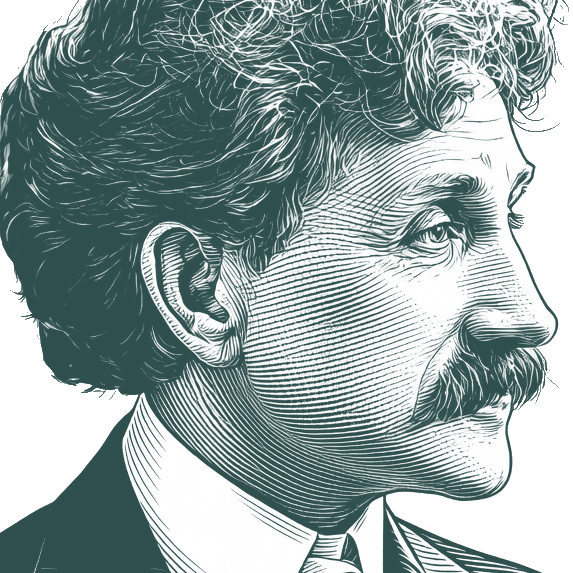
The same general moral code applies to every being that feels. In a general way, whatever is right to human beings is right also to non-human beings;… - J. Howard Moore
""
The same general moral code applies to every being that feels. In a general way, whatever is right to human beings is right also to non-human beings; and whatever is wrong to human beings is wrong to non-human beings. There are disparities everywhere—disparities in ethical standing, just as there are disparities in usefulness and feeling-power. But there are no greater disparities between men and other animals than there are between different individuals or varieties of the human species. I do not say nor do I believe that a guinea-pig has the same rights to life and to the satisfaction of its desires as an Englishman has. Neither has an Eskimo. But I do say that an ethical system that treats guinea pigs and non-humans generally with the ethical indifference that they receive to-day is a product of human provincialism pure and simple and is destined to become as obsolete as human slavery with the blooming of the ages.
English
Collect this quote
About
J. Howard Moore
John Howard Moore (December 4, 1862 – June 17, 1916) was an American zoologist, philosopher, educator and social reformer. He advocated for the ethical consideration and treatment of animals and authored several articles, books, essays and pamphlets on topics including education, ethics, evolutionary biology, humanitarianism, utilitarianism and vegetarianism. He is best known for his work The Universal Kinship (1906), which advocated for a secular sentiocentric philosophy he called the doctrine of "Universal Kinship", based on the shared evolutionary kinship between all sentient beings.
Why are non-human beings ostracized and treated by humans with no consideration save as they administer to selfish human ends? Whence the doctrine that non-human species were made for the hominine species, and that there is no logic or sanity in their existence save as they feed or slave for their human tyrants? Because they are dumb, that is, because their language is not understood by human minds, and because they are wild, that is, because they are for the most part unassociated with human animals, and because the civilized consciousness, which is barely able to realize the kinship of human beings, is yet too feeble and rudimentary to comprehend the solidarity of all beings.
The question is not. Shall man be master of the earth? but. What sort of a master shall he be? Shall he be cruel and selfish, bigoted and imperialistic, thinking only of himself and sacrificing the interests of others to his own heartless purposes? or shall he be the responsible administrator of the universe, presiding over the affairs of the earth honourably and equitably, with a mind single to the good of all? Shall he be a savage despot or a schoolmaster? a feared and hated monster, or a wise, patient, and affectionate father? Since he has become the manager of the planet, shall he manage it as he would wish it to be managed if he were a subordinate and some other race had succeeded to the superintendency, or shall he cut loose from all moral obligations, ignore the promptings of his better self, and run things absolutely in the interest of himself? Which shall it be—the great law of love or the savage law of might?
Works in ChatGPT, Claude, or Any AI
Add semantic quote search to your AI assistant via MCP. One command setup.
Science has many things to answer for that it is not guilty of. Many things are done in the name of "science" because those who do them are ashamed to acknowledge their real motives. Roosevelt shot monkeys and antelopes in Africa in the name of "science," but his real motives are known to have been much lower.