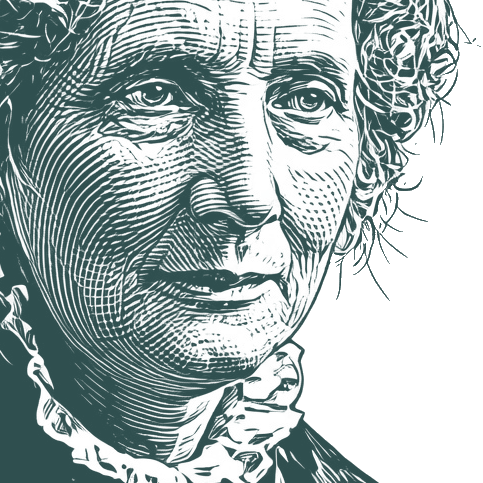
Harriet Elizabeth Beecher Stowe (14 June 1811 – 1 July 1896) was an American abolitionist and writer, most famous as the author of the anti-slavery novel Uncle Tom's Cabin.
Biography information from
Wikiquote·
Portrait adapted from
Wikimedia Commons, not specified (Public domain / CC0)
Also Known As
Birth Name:
Elizabeth Harriet Beecher
Native Name:
Harriet Beecher
Alternative Names:
Christopher Crowfield
•
Harriet Elizabeth Beecher Stowe
•
Enrieta Elizabeth Beecher Stowe
•
Harriet Elizabeth Beecher
•
Harriet Elisabeth Beecher Stowe
•
Harriet Elizabeth Beecher-Stowe
To fill up Liberia with an ignorant, inexperienced, half-barbarized race, just escaped from the chains of slavery, would be only to prolong, for ages, the period of struggle and conflict which attends the inception of new enterprises.
"Well, mother, people have different names for different things. I hear a great deal about Ellery Davenport's tact and knowledge of the world, and all that; but he does a great deal of what I call lying, — so there! Now there are some folks who lie blunderingly, and unskilfully, but I 'll say for Ellery Davenport that he can lie as innocently and sweetly and prettily as a French woman, and I can't say any more. And if a woman does n't want to believe him, she just must n't listen to him, that 's all. I always believe him when he is around, but when he 's away and I think him over, I know just what he is, and see just what an old fool he has made of me." These words dropped into my childish mind as if you should accidentally drop a ring into a deep well. I did not think of them much at the time, but there came a day in my life when the ring was fished up out of the well, good as new.
Enhance Your Quote Experience
Enjoy ad-free browsing, unlimited collections, and advanced search features with Premium.
He had been able to repress every disrespectful word; but the flashing eye, the gloomy and troubled brow, were part of a natural language that could not be repressed, — indubitable signs, which showed too plainly that the man could not become a thing.