I have received no assurance that anything we can do will eradicate suffering. I think the best results are obtained by people who work quietly away … - C. S. Lewis
""
I have received no assurance that anything we can do will eradicate suffering. I think the best results are obtained by people who work quietly away at limited objectives, such as the abolition of the slave trade, or prison reform, or factory acts, or tuberculosis, not by those who think they can achieve universal justice, or health, or peace. I think the art of life consists in tackling each immediate evil as well as we can.
Clive Staples Lewis (29 November 1898 – 22 November 1963) was an Irish author, scholar of medieval literature, and Christian apologist. He is best known for his essays on Christianity and for the children's fantasy series The Chronicles of Narnia.
Biography information from
Wikiquote·
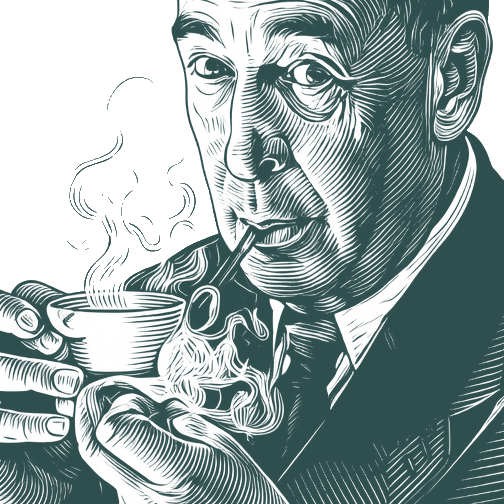
Portrait adapted from
Wikimedia Commons, John S. Murray (Public domain / CC0)
Also Known As
Pen Names:
N. W. Clerk
•
Clive Hamilton
Birth Name:
Clive Staples Lewis
Alternative Names:
CS Lewis
•
C.S. Lewis
•
Clive Lewis
•
Nat Whilk
It is a serious thing to live in a society of possible gods and goddesses, to remember that the dullest most uninteresting person you talk to may one day be a creature which, if you saw it now, you would be strongly tempted to worship, or else a horror and a corruption such as you now meet, if at all, only in a nightmare. All day long we are, in some degree helping each other to one or the other of these destinations. It is in the light of these overwhelming possibilities, it is with the awe and the circumspection proper to them, that we should conduct all of our dealings with one another, all friendships, all loves, all play, all politics. There are no ordinary people. You have never talked to a mere mortal. Nations, cultures, arts, civilizations — these are mortal, and their life is to ours as the life of a gnat. But it is immortals whom we joke with, work with, marry, snub, and exploit — immortal horrors or everlasting splendors.
God will invade. But I wonder whether people who ask God to interfere openly and directly in our world quite realise what it will be like when He does. When that happens, it is the end of the world. When the author walks on to the stage the play is over. God is going to invade, all right: but what is the good of saying you are on His side then, when you see the whole natural universe melting away like a dream and something else - something it never entered your head to conceive - comes crashing in; something so beautiful to some of us and so terrible to others that none of us will have any choice left? For this time it will God without disguise; something so overwhelming that it will strike either irresistible love or irresistible horror into every creature. It will be too late then to choose your side. There is no use saying you choose to lie down when it has become impossible to stand up. That will not be the time for choosing; it will be the time when we discover which side we really have chosen, whether we realised it before or not. Now, today, this moment, is our chance to choose the right side. God is holding back to give us that chance. It will not last for ever. We must take it or leave it.
If I find in myself desires which nothing in this world can satisfy, the only logical explanation is that I was made for another world.