Unlimited Quote Collections
Organize your favorite quotes without limits. Create themed collections for every occasion with Premium.
" "I am neither a theologian, nor a scholar learned in the history of religions, nor an anthropologist. Psychology is the only branch of learning in which I am particularly versed. To the psychologist the religious propensities of man must be at least as interesting as any other of the facts pertaining to his mental constitution.
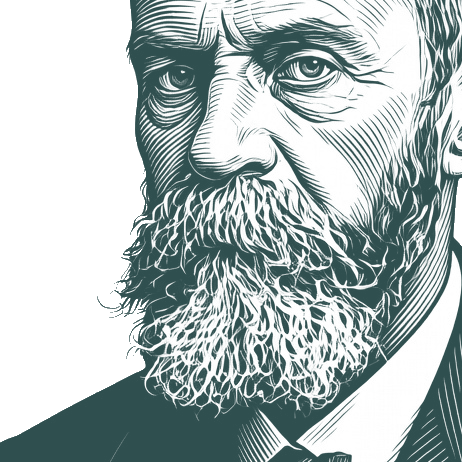
William James (11 January 1842 – 26 August 1910) was a pioneering American psychologist and philosopher. He developed the philosophical perspective known as radical empiricism, and wrote influential books on the science of psychology, the psychology of religious experience and mysticism, and the philosophy of pragmatism.
Biography information from Wikiquote
Organize your favorite quotes without limits. Create themed collections for every occasion with Premium.
Related quotes. More quotes will automatically load as you scroll down, or you can use the load more buttons.
Among us English-speaking peoples especially do the praises of poverty need once more to be boldly sung. We have grown literally afraid to be poor. We despise any one who elects to be poor in order to simplify and save his inner life. If he does not join the general scramble and pant with the money-making street, we deem him spiritless and lacking in ambition. We have lost the power even of imagining what the ancient idealization of poverty could have meant: the liberation from material attachments, the unbribed soul, the manlier indifference, the paying our way by what we are or do and not by what we have, the right to fling away our life at any moment irresponsibly — the more athletic trim, in short, the moral fighting shape. When we of the so-called better classes are scared as men were never scared in history at material ugliness and hardship; when we put off marriage until our house can be artistic, and quake at the thought of having a child without a bank-account and doomed to manual labor, it is time for thinking men to protest against so unmanly and irreligious a state of opinion. It is true that so far as wealth gives time for ideal ends and exercise to ideal energies, wealth is better than poverty and ought to be chosen. But wealth does this in only a portion of the actual cases. Elsewhere the desire to gain wealth and the fear to lose it are our chief breeders of cowardice and propagators of corruption. There are thousands of conjunctures in which a wealth-bound man must be a slave, whilst a man for whom poverty has no terrors becomes a freeman. Think of the strength which personal indifference to poverty would give us if we were devoted to unpopular causes. We need no longer hold our tongues or fear to vote the revolutionary or reformatory ticket. Our stocks might fall, our hopes of promotion vanish, our salaries stop, our club doors close in our faces; yet, while we lived, we would imperturbably bear witness to the spirit, and our example would help to
Without risks or prizes for the darer, history would be insipid indeed; and there is a type of military character which every one feels that the race should never cease to breed, for everyone is sensitive to its superiority. The duty is incumbent on mankind, of keeping military character in stock — if keeping them, if not for use, then as ends in themselves and as pure pieces of perfection, — so that Roosevelt's weaklings and mollycoddles may not end by making everything else disappear from the face of nature.
Premium members can get their quote collection automatically imported into their Quotewise collections.
There can be no doubt that as a matter of fact a religious life, exclusively pursued, does tend to make the person exceptional and eccentric. I speak not now of your ordinary religious believer, who follows the conventional observances of his country, whether it be Buddhist, Christian, or Mohammedan. His religion has been made for him by others, communicated to him by tradition, determined to fixed forms by immitation, and retained by habit. It would profit us little to study this second-hand religious life. We must make search rather for the original experiences which were the pattern-setters to all this mass of suggested feeling and imitated conduct.