Enhance Your Quote Experience
Enjoy ad-free browsing, unlimited collections, and advanced search features with Premium.
" "One has to bear in mind that one of the tactics of revolution is to destroy one's predecessors in authority at any cost or hazard.
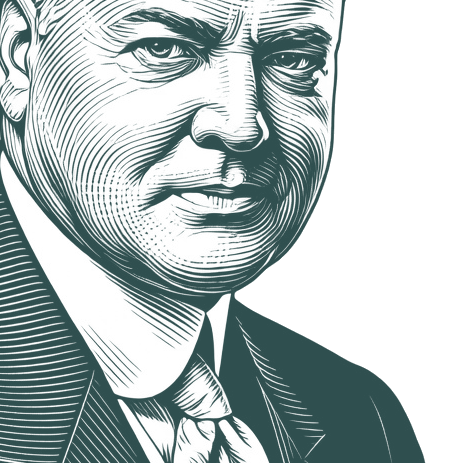
Herbert Clark Hoover (10 August 1874 – 20 October 1964) was the 31st president of the United States (1929–33). He was a professional mining engineer and was raised as a Quaker. A Republican, Hoover served as head of the U.S. Food Administration during World War I, and became internationally known for humanitarian relief efforts in war-time Belgium. As the United States Secretary of Commerce in the 1920s under Presidents Warren G. Harding and Calvin Coolidge, he promoted partnerships between government and business under the rubric "economic modernization". In the presidential election of 1928, Hoover easily won the Republican nomination, despite having no elected-office experience. Hoover is the most recent cabinet secretary to be elected President of the United States, as well as one of only three presidents (along with William Howard Taft and Donald Trump) elected without electoral experience or high military rank.
Biography information from Wikiquote
Enjoy ad-free browsing, unlimited collections, and advanced search features with Premium.
Related quotes. More quotes will automatically load as you scroll down, or you can use the load more buttons.
[<nowiki/>Engineering] is a great profession. There is the fascination of watching a figment of the imagination emerge through the aid of science to a plan on paper. Then it moves to realization in stone or metal or energy. Then it brings jobs and homes to men. Then it elevates the standards of living and adds to the comforts of life. That is the engineer’s high privilege. The great liability of the engineer compared to men of other professions is that his works are out in the open where all can see them. His acts, step by step, are in hard substance. He cannot bury his mistakes in the grave like the doctors. He cannot argue them into thin air or blame the judge like the lawyers. He cannot, like the architects, cover his failures with trees and vines. He cannot, like the politicians, screen his shortcomings by blaming his opponents and hope that the people will forget. The engineer simply cannot deny that he did it. If his works do not work, he is damned. That is the phantasmagoria that haunts his nights and dogs his days. He comes from the job at the end of the day resolved to calculate it again. He wakes in the night in a cold sweat and puts something on paper that looks silly in the morning. All day he shivers at the thought of the bugs which will inevitably appear to jolt its smooth consummation. On the other hand, unlike the doctor his is not a life among the weak. Unlike the soldier, destruction is not his purpose. Unlike the lawyer, quarrels are not his daily bread. To the engineer falls the job of clothing the bare bones of science with life, comfort, and hope. No doubt as years go by people forget which engineer did it, even if they ever knew. Or some politician puts his name on it. Or they credit it to some promoter who used other people’s money with which to finance it. But the engineer himself looks back at the unending stream of goodness which flows from his successes with satisfactions that few professions may know. And the verdict of his fellow professionals is all the accolades he wants.
Chat naturally about what you need. Each answer links back to real quotes with citations.