I am spectator, not partaker, here. To me it seems more like a pageant made To represent mirth, than the mirth itself. - Letitia Elizabeth Landon

" "

I am spectator, not partaker, here.
To me it seems more like a pageant made
To represent mirth, than the mirth itself.

English
Collect this quote

About Letitia Elizabeth Landon

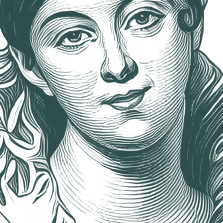
Letitia Elizabeth Landon (August 14, 1802 – October 15, 1838) was an English poet and novelist, better known by her initials L. E. L. She was one of the richest sources of epigrams in the early nineteenth century and one reviewer compared her to Rochefoucauld. Sometimes she adopts an adversarial role, giving contradictory viewpoints. Some of her thoughts recur, either developed or refined, but over time she also threw out differing opinions on some subjects; changeability, she argues, is one of our principal traits and, as she has one character remark, truth is like the philosopher's stone, a thing not to be discovered.

Also Known As

Native Name: Letitia Landon
Alternative Names: L. E. L. Letitia Maclean Letitia Elizabeth Maclean Landon
Enhance Your Quote Experience

Enjoy ad-free browsing, unlimited collections, and advanced search features with Premium.

Related quotes. More quotes will automatically load as you scroll down, or you can use the load more buttons.

Additional quotes by Letitia Elizabeth Landon

What is the world that lies around our own ? Shadowy, unsubstantial, and wonderful are the viewless elements, peopled with spirits powerful and viewless as the air which is their home. From the earth's earliest hour, the belief in the supernatural has been universal. At first the faith was full of poetry ; for, in those days, the imagination walked the earth even as did the angels, shedding their glory around the children of men. The Chaldeans watched from their lofty towers the silent beauty of night — they saw the stars go forth on their appointed way, and deemed that they bore with them the mighty records of eternity. Each separate planet shone on some mortal birth, and as its aspect was for good or for evil, such was the aspect of the fortunes that began beneath its light. Those giant watch-towers, with their grey sages, asked of the midnight its mystery, and held its starry roll to be the chronicle of this breathing world. Time past on, angels visited the earth no more, and the divine beliefs of young imagination grew earthlier. Yet poetry lingered in the mournful murmur of the oaks of Dodona, and in the fierce war song of the flying vultures, of whom the Romans demanded tidings of conquest. But prophecy gradually sank into divination, and it is a singular proof of the extent both of human credulity and of curiosity, to note the various methods that have had the credit of forestalling the future. From the stars to a tea-cup is a fall indeed —

What is the light of a poet's name,
If it is not his country that hallows his fame?
Where may he look for guerdon so fair
As the honour and praise that await him there?
His name will be lost and his grave forgot,
If the tears of his country preserve them not! . . .

Enhance Your Quote Experience

Enjoy ad-free browsing, unlimited collections, and advanced search features with Premium.

Loading...