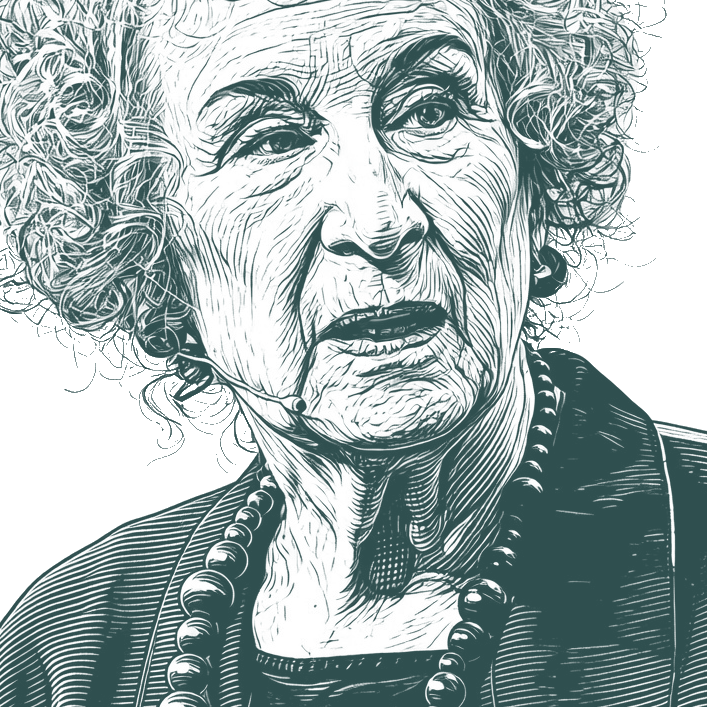
In general I might agree with you: women should not contemplate war, should not weigh tactics impartially, or evade the word enemy, or view both side… - Margaret Atwood
""
In general I might agree with you: women should not contemplate war, should not weigh tactics impartially, or evade the word enemy, or view both sides and denounce nothing. Women should march for peace, or hand out white feathers to arouse bravery, spit themselves on bayonets to protect their babies, whose skulls will be split anyway, or, having been raped repeatedly, hang themselves with their own hair. These are the functions that inspire general comfort. That, and the knitting of socks for the troops and a sort of moral cheerleading. Also: mourning the dead. Sons, lovers, and so forth. All the killed children.
Blessed are they that mourn, for they shall be comforted. Nobody said when.
That was when they suspended the Constitution. They said it would be temporary. There wasn't even any rioting in the streets. People stayed home at night, watching television, looking for some direction. There wasn't even an enemy you could put your finger on.
Works in ChatGPT, Claude, or Any AI
Add semantic quote search to your AI assistant via MCP. One command setup.
I did not know that the rules about these things were different if you were female. I did not know that "poetess" was an insult, and that I myself would some day be called one. I did not know that to be told I had transcended my gender would be considered a compliment. I didn't know — yet — that black was compulsory. All of that was in the future. When I was sixteen, it was simple. Poetry existed; therefore it could be written; and nobody had told me — yet — the many, many reasons why it could not be written by me.