Sudden and near the trumpet's notes out-spread, And soon his eyes could see the metal flower, Shining upturned, out on the morning pour Its incense a… - George Eliot
""
Sudden and near the trumpet's notes out-spread, And soon his eyes could see the metal flower, Shining upturned, out on the morning pour Its incense audible; could see a train From out the street slow-winding on the plain With lyres and cymbals, flutes and psalteries, While men, youths, maids, in concert sang to these With various throat, or in succession poured, Or in full volume mingled. But one word Ruled each recurrent rise and answering fall, As when the multitudes adoring call On some great name divine, their common soul, The common need, love, joy, that knits them in one whole. The word was "Jubal!"... "Jubal" filled the air, And seemed to ride aloft, a spirit there, Creator of the choir, the full-fraught strain That grateful rolled itself to him again. The aged man adust upon the bank — Whom no eye saw — at first with rapture drank The bliss of music, then, with swelling heart, Felt, this was his own being's greater part, The universal joy once born in him.
English
Collect this quote
About
George Eliot
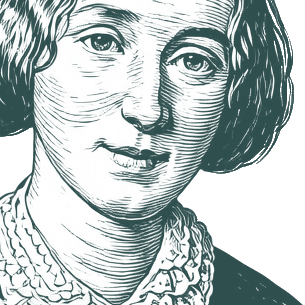
George Eliot (born Mary Ann Evans; 22 November 1819 – 22 December 1880) was an English novelist and poet. Despite the strong social customs of her times against such arrangements, she lived unmarried with fellow writer George Henry Lewes for over 20 years.
Biography information from
Wikiquote·
Portrait adapted from
Wikimedia Commons, replica by François D’Albert Durade (1804–1886) (Public domain / CC0)
Also Known As
Birth Name:
Mary Anne Evans
Native Name:
Mary Ann Evans
•
Marian Evans
Alternative Names:
Mary Anne Evans Cross
•
Mary Anne Cross
•
Marian Cross
Jealousy is never satisfied with anything short of an omniscience that would detect the subtlest fold of the heart.
Self-consciousness of the manner is the expensive substitute for simplicity.
A human life, I think, should be well rooted in some spot of native land, where it may get the love of tender kinship for the face of earth, for the labours men go forth to, for the sounds and accents that haunt it, for whatever will give that early home a familiar unmistakeable difference amidst the future widening of knowledge: a spot where the definiteness of early memories may be inwrought with affection, and kindly acquaintance with all neighbours, even to the dogs and donkeys, may spread not by sentimental effort and reflection, but as a sweet habbit of the blood. At five years old, mortals are not prepared to be citizens of the world, to be stimulated by abstract nouns, to soar above preference into impartiality; and that prejudice in favour of milk with which we blindly begin, is a type of the way body and soul must get nourished at least for a time. The best introduction to astronomy is to think of the nightly heavens as a little lot of stars belonging to one's own homestead.