The community has no bribe that will tempt a wise man. You may raise money enough to tunnel a mountain, but you cannot raise money enough to hire a m… - Henry David Thoreau
""
The community has no bribe that will tempt a wise man. You may raise money enough to tunnel a mountain, but you cannot raise money enough to hire a man who is minding his own business. An efficient and valuable man does what he can, whether the community pay him for it or not. The inefficient offer their inefficiency to the highest bidder, and are forever expecting to be put into office. One would suppose that they were rarely disappointed.
Henry David Thoreau (12 July 1817 – 6 May 1862) was an American essayist, poet, philosopher, abolitionist, naturalist, tax resister, development critic, surveyor, and historian. A leading transcendentalist, Thoreau is best known for his book Walden, a reflection upon simple living in natural surroundings, and his essay Resistance to Civil Government (also known as Civil Disobedience), an argument for disobedience to an unjust state.
Biography information from
Wikiquote·
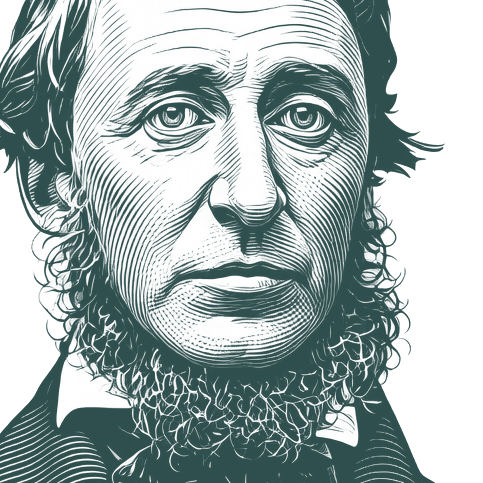
Portrait adapted from
Wikimedia Commons, B. D. Maxham (Public domain / CC0)
Also Known As
Birth Name:
David Henry Thoreau
Alternative Names:
Thoreau
•
Henry D. Thoreau
•
Henry Thoreau
I think that we may safely trust a good deal more than we do. We may waive just so much care of ourselves as we honestly bestow elsewhere. Nature is well adapted to our weakness as our strength. The incessant anxiety and strain of some is a well nigh incurable form of disease. We are made to exaggerate the importance of what work we do; and yet how much is not done by us! or, what if we had been taken sick? How vigilant we are! determined not to live by faith if we can avoid it; all the day long on the alert, at night we unwillingly say our prayers and commit ourselves to uncertainties. So thoroughly and sincerely are we compelled to live, reverencing our life, and denying the possibility of change. This is the only way, we say; but there are as many ways as there can be drawn radii from one centre. All change is a miracle to contemplate; but it is a miracle which is taking place every instant. Confucius said, “To know that we know what we know, and that we do not know what we do not know, that is true knowledge.” When one man has reduced a fact of the imagination to be a fact to his understanding, I foresee that all men will at length establish their lives on that basis.
The book has never been written which is to be accepted without any allowance.
The higher the mountain on which you stand, the less change in the prospect from year to year, from age to age.