Consider one of the standard "laments" or "stories of wonder" in conventional tales of natural history: the mayfly that lives but a single day (a sad… - Stephen Jay Gould
""
Consider one of the standard "laments" or "stories of wonder" in conventional tales of natural history: the mayfly that lives but a single day (a sadness even recorded in the technical name for this biological group - Ephemoptera). Yes, the adult fly may enjoy only a moment in the sun, but we should honor the entire life cycle and recognize that the larvae, or juvenile stages, live and develop for months. Larvae are not mere preparations for a brief adulthood. We might better read the entire life cycle as a division of labor, with larvae as feeding and growing stages, and the adult as a short-lived reproductive machine. In this sense, we could well view the adult fly's day as the larva's clever and transient device for making a new generation of truly fundamental feeders.
English
Collect this quote
About
Stephen Jay Gould
Stephen Jay Gould (September 10, 1941 – May 20, 2002) was an American geologist, paleontologist, evolutionary biologist and popular-science author, who spent most of his career teaching at Harvard University and working at the American Museum of Natural History in New York. He was one of the most influential and widely read writers of popular science of his generation.
Biography information from
Wikiquote·
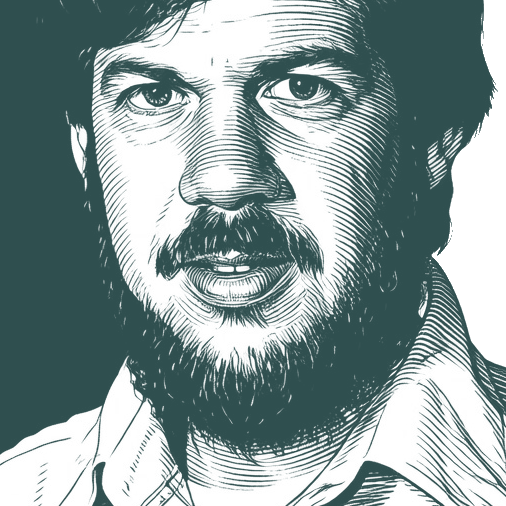
Portrait adapted from
Wikimedia Commons, Lawrence Lipke (Public domain / CC0)
I picture several reviewers of my own books as passing a long future lodged between Brutus and Judas in the jaws of Satan.
People, as curious primates, dote on concrete objects that can be seen and fondled. God dwells among the details, not in the realm of pure generality. We must tackle and grasp the larger, encompassing themes of our universe, but we make our best approach through small curiosities that rivet our attention - all those pretty pebbles on the shoreline of knowledge. For the ocean of truth washes over the pebbles with every wave, and they rattle and clink with the most wondrous din.
Go Premium
Support Quotewise while enjoying an ad-free experience and premium features.
Yet I also appreciate that we cannot win this battle to save species and environments without forging an emotional bond between ourselves and nature as well—for we will not fight to save what we do not love (but only appreciate in some abstract sense). So let them all continue—the films, the books, the television programs, the zoos, the little half acre of ecological preserve in any community, the primary school lessons, the museum demonstrations, even […] the 6:00 A.M. bird walks. Let them continue and expand because we must have visceral contact in order to love. We really must make room for nature in our hearts.