I have an immense appetite for solitude, like an infant for sleep, and if I don't get enough for this year, I shall cry all the next. - Henry David Thoreau
""
I have an immense appetite for solitude, like an infant for sleep, and if I don't get enough for this year, I shall cry all the next.
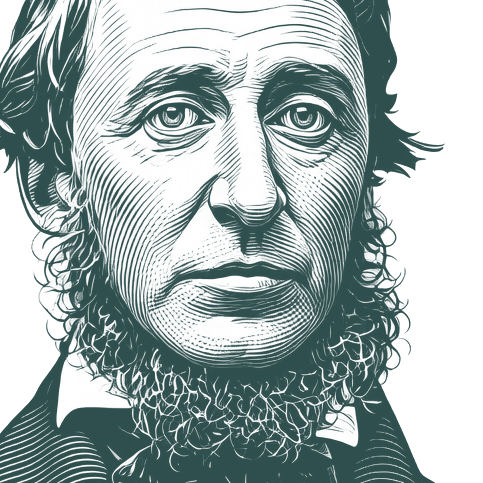
Henry David Thoreau (12 July 1817 – 6 May 1862) was an American essayist, poet, philosopher, abolitionist, naturalist, tax resister, development critic, surveyor, and historian. A leading transcendentalist, Thoreau is best known for his book Walden, a reflection upon simple living in natural surroundings, and his essay Resistance to Civil Government (also known as Civil Disobedience), an argument for disobedience to an unjust state.
Biography information from
Wikiquote·
Portrait adapted from
Wikimedia Commons, B. D. Maxham (Public domain / CC0)
Also Known As
Birth Name:
David Henry Thoreau
Alternative Names:
Thoreau
•
Henry D. Thoreau
•
Henry Thoreau
Nothing is so much to be feared as fear. Atheism may comparatively be popular with God himself.
I have given myself up to nature; I have lived so many springs and summers and autumns and winters as if I had nothing else to do but live them, and imbibe whatever nutriment they had for me; I have spent a couple of years, for instance, with the flowers chiefly, having none other so binding engagement as to observe when they opened; I could have afforded to spend a whole fall observing the changing tints of the foliage. Ah, how I have thriven on solitude and poverty!
Enhance Your Quote Experience
Enjoy ad-free browsing, unlimited collections, and advanced search features with Premium.