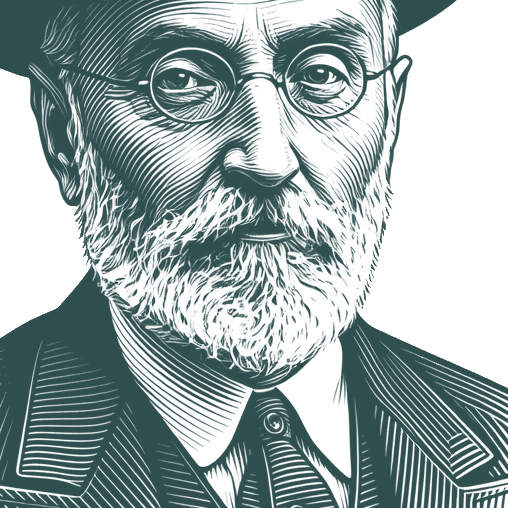
Proceeding from ourselves, from our own human consciousness, the only consciousness which we feel from within and in which feeling is identical with … - Miguel de Unamuno
""
Proceeding from ourselves, from our own human consciousness, the only consciousness which we feel from within and in which feeling is identical with being, we attribute some sort of consciousness, more or less dim, to all living things, and even to the stones themselves, for they also live. And the evolution of organic beings is simply the struggle to realize fullness of consciousness through suffering, a continual aspiration to be others without ceasing to be themselves, to break and yet to preserve their proper limits.
English
Collect this quote
About
Miguel de Unamuno
Miguel de Unamuno y Jugo (29 September 1864 – 31 December 1936) was a Spanish essayist, novelist, poet, playwright and philosopher.
Biography information from
Wikiquote·
Portrait adapted from
Wikimedia Commons, Agence de presse Meurisse (Public domain / CC0)
What we really long for after death is to go on living this life, this same mortal life, but without its ills without its tedium, and without death. Seneca, the Spaniard, gave expression to this in his Consolatio ad Marciam... And what but that is the meaning of that comic conception of the eternal recurrence which issued from the tragic soul of poor Nietzsche, hungering for concrete and temporal immortality?
...this visionary [ Emanuel Swedenborg in his book Heaven and Hell ] tells us, under the form of images, that each angel, each society of angels, and the whole of heaven comprehensively surveyed, appear in human form, and in the virtue of this human form the Lord rules them as one man.
Works in ChatGPT, Claude, or Any AI
Add semantic quote search to your AI assistant via MCP. One command setup.
And yet this might not necessarily involve the conversion of the Trinity into a Quaternity. If... in Greek, spirit, instead of being neuter had been feminine, who can say that the Virgin Mary might not already have become an incarnation or humanization of the Holy Spirit? ...And thus a dogmatic evolution would have been effected parallel to that of the divinization of Jesus, the Son, and his identification with the Word.