drop the economist’s beloved notion of ‘externalities’, those incidental effects felt by people who were not involved in the transactions that produc… - Kate Raworth
""
drop the economist’s beloved notion of ‘externalities’, those incidental effects felt by people who were not involved in the transactions that produced them — such as toxic effluent that affects communities living downstream of a river-polluting factory, or the exhaust fumes inhaled by cyclists biking through city traffic. Such negative externalities, remarks the ecological economist Herman Daly, are those things that ‘we classify as “external” costs for no better reason than because we have made no provision for them in our economic theories’.21 The systems dynamics expert John Sterman concurs. ‘There are no side effects — just effects,’ he says, pointing out that the very notion of side effects is just ‘a sign that the boundaries of our mental models are too narrow, our time horizons too short’.
English
Collect this quote
About
Kate Raworth
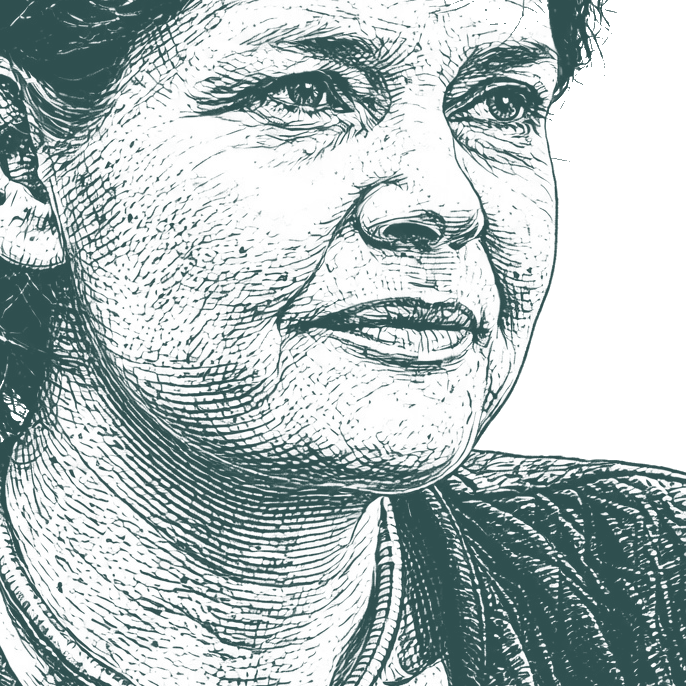
Kate Raworth (1970-) is an English economist, known for her 'doughnut economics' model balancing between essential human needs and planetary boundaries.
For over 70 years economics has been fixated on GDP, or national output, as its primary measure of progress. That fixation has been used to justify extreme inequalities of income and wealth coupled with unprecedented destruction of the living world. For the twenty-first century a far bigger goal is needed: meeting the human rights of every person within the means of our life-giving planet.
Around 40 percent of the world’s agricultural land is now seriously degraded, and by 2025 two out of three people worldwide will live in water-stressed regions.
Works in ChatGPT, Claude, or Any AI
Add semantic quote search to your AI assistant via MCP. One command setup.
First, invest in human ingenuity by teaching social entrepreneurship, problem-solving and collaboration in schools and universities worldwide: such skills will equip the next generation to innovate in open-source networks like no generation before them. Second, ensure that all publicly funded research becomes public knowledge by contractually requiring it to be licensed in the knowledge commons, rather than permitting it to be locked away under patents and copyright for private commercial gain. Third, roll back the excessive reach of corporate intellectual property claims in order to prevent spurious patent and copyright applications from encroaching on the knowledge commons.