Towering genius disdains a beaten path. It seeks regions hitherto unexplored. It sees no distinction in adding story to story upon the monuments of f… - Abraham Lincoln
""
Towering genius disdains a beaten path. It seeks regions hitherto unexplored. It sees no distinction in adding story to story upon the monuments of fame erected to the memory of others. It denies that it is glory enough to serve under any chief. It scorns to tread in the footsteps of any predecessor, however illustrious. It thirsts and burns for distinction; and, if possible, it will have it, whether at the expense of emancipating slaves, or enslaving free men.
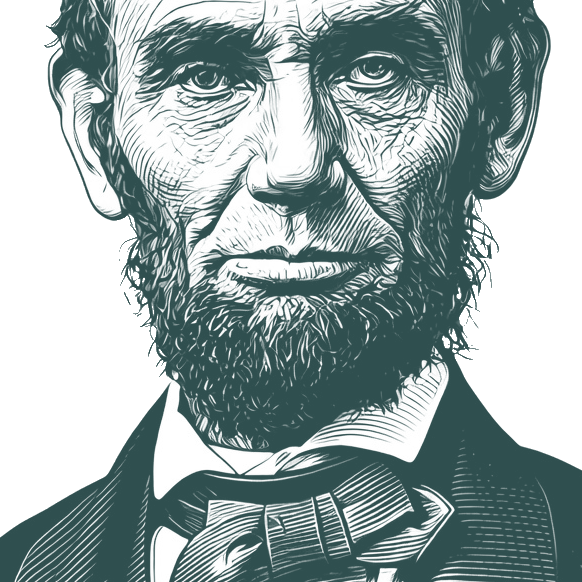
Abraham Lincoln (12 February 1809 – 15 April 1865) was the 16th president of the United States, serving from March 1861 until his assassination in April 1865. Initially entering politics as a Whig, he became a member of the US congress from Illinois, and later the first Republican president, leading Union forces throughout the moral, constitutional, political and military crises of the American Civil War, during which he abolished slavery and strengthened the U.S. government.
Biography information from
Wikiquote·
Portrait adapted from
Wikimedia Commons, Alexander Gardner (Public domain / CC0)
Also Known As
Alternative Names:
Honest Abe
•
President Lincoln
•
Abe Lincoln
•
Uncle Abe
•
A. Lincoln
•
Lincoln
Related quotes. More quotes will automatically load as you scroll down, or you can use the load more buttons.
Shorter versions of this quote
Towering genius disdains a beaten path... It sees no distinction in adding story to story... It scorns to tread in the footsteps of any predecessor, however illustrious. It thirsts and burns for distinction; and, if possible, it will have it...
Towering genius distains a beaten path. It seeks regions hitherto unexplored.
Discourage litigation. Persuade your neighbors to compromise whenever you can. Point out to them how the nominal winner is often a real loser - in fees, expenses, and waste of time. As a peacemaker the lawyer has a superior opportunity of being a good man. There will still be business enough.
I do not forget that I was satisfied with your arrangement to leave Banks at Mannassas Junction; but when that arrangement was broken up, and nothing was substituted for it, of course I was not satisfied. I was constrained to substitute something for it myself. And now allow me to ask "Do you really think I should permit the line from Richmond, via Mannassas Junction, to this city to be entirely open, except what resistance could be presented by less than twenty thousand unorganized troops?" This is a question which the country will not allow me to evade.
Unlimited Quote Collections
Organize your favorite quotes without limits. Create themed collections for every occasion with Premium.
This is essentially a people's contest. On the side of the Union it is a struggle for maintaining in the world that form and substance of government whose leading object is to elevate the condition of men; to lift artificial weights from all shoulders; to clear the paths of laudable pursuit for all; to afford all an unfettered start and a fair chance in the race of life. Yielding to partial and temporary departures, from necessity, this is the leading object of the Government for whose existence we contend.