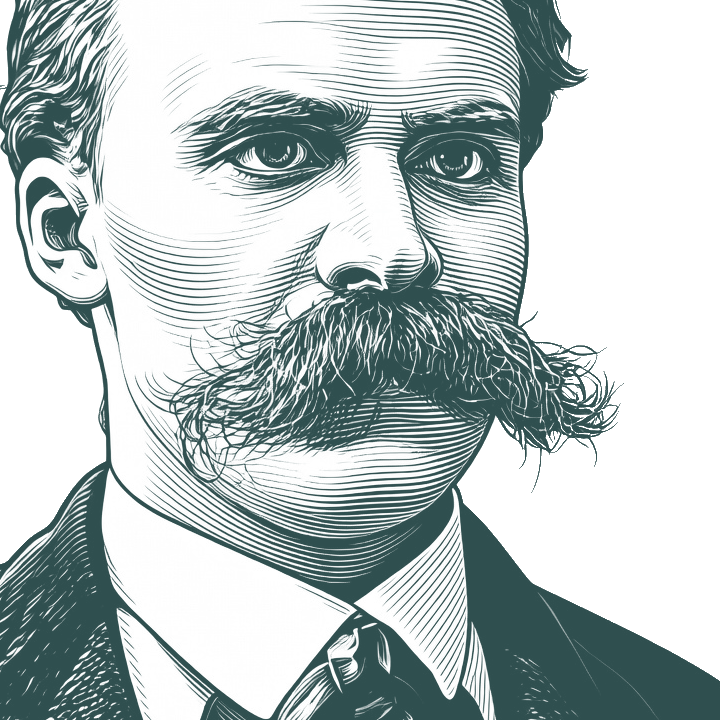
On the mountains of truth you can never climb in vain: either you will reach a point higher up today, or you will be training your powers so that you… - Friedrich Nietzsche
""
On the mountains of truth you can never climb in vain: either you will reach a point higher up today, or you will be training your powers so that you will be able to climb higher tomorrow.
Friedrich Wilhelm Nietzsche (15 October 1844 – 25 August 1900) was a German philosopher, cultural critic, composer, poet, writer, and philologist whose work has exerted a profound influence on modern intellectual history. His critiques of contemporary culture, religion, and philosophy centered on a basic question regarding the foundation of values and morality.
Biography information from
Wikiquote·
Portrait adapted from
Wikimedia Commons, Friedrich Hermann Hartmann (Public domain / CC0)
Also Known As
Alternative Names:
Friedrich Wilhelm Nietzsche
•
Nietzsche
Anarchists are mouthpieces of a declining stratum of society; when they work themselves into a state of righteous indignation demanding 'rights', 'justice', 'equal rights', they are just acting under the pressure of their own lack of culture, which has no way of grasping why they really suffer, or what they lack in life.
The worst sickness of men tends to originate in the sentimental way they try to combat their sicknesses. What seems like an easy cure, in the long run produces something worse than what it's supposed to overcome. Fake consolations always have to be paid for with a general and profound worsening of the original complaint.
Enhance Your Quote Experience
Enjoy ad-free browsing, unlimited collections, and advanced search features with Premium.
"Grant me, ye gods, but one certainty," runs Parmenides' prayer, "and if it be but a log's breadth on which to lie. on which to ride upon the sea of uncertainty. Take away everything that comes-to-be, everything lush, colorful, blossoming, illusory, everything that charms and is alive. Take all these for yourselves and grant me but the one and only, poor empty certainty.”