Partly from being a more scattered population, which leads to self-dependence — partly to their religious struggles having given an historical charac… - Letitia Elizabeth Landon
""
Partly from being a more scattered population, which leads to self-dependence — partly to their religious struggles having given an historical character to their ordinary remembrances, nourished by that family pride which loves to look back — there is more individuality among the Scotch than among any other peasantry.
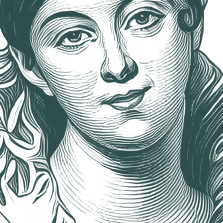
Letitia Elizabeth Landon (August 14, 1802 – October 15, 1838) was an English poet and novelist, better known by her initials L. E. L. She was one of the richest sources of epigrams in the early nineteenth century and one reviewer compared her to Rochefoucauld. Sometimes she adopts an adversarial role, giving contradictory viewpoints. Some of her thoughts recur, either developed or refined, but over time she also threw out differing opinions on some subjects; changeability, she argues, is one of our principal traits and, as she has one character remark, truth is like the philosopher's stone, a thing not to be discovered.
Death came like a friend to restore thee To those who had died before thee: Father, mother, Sister, brother— There were none of these to mourn o'er thee. But now that Death has found thee, Thy kindred and friends are round thee ; In their rest they are laid In the dark yew shade, And cold sleep like their own has bound thee.
I would have rather been a slave In fettered bondage by thy side, Than shared in all the world could give, Had it not given thee beside.
Enhance Your Quote Experience
Enjoy ad-free browsing, unlimited collections, and advanced search features with Premium.
I do not believe that affection can exist with truth, without the ideal, and without blending with itself all that is best and most earnest in our nature.