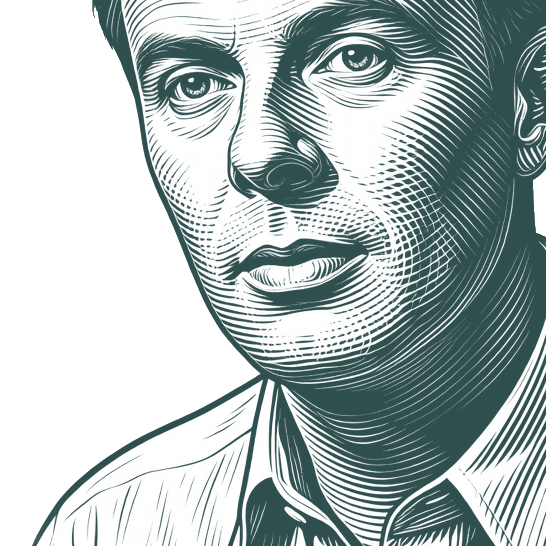
The sick woman was usurping the place of the healthy one. He was being dragged back from the memory of the sunlit down and the quick, laughing girl, … - Aldous Huxley
""
The sick woman was usurping the place of the healthy one. He was being dragged back from the memory of the sunlit down and the quick, laughing girl, back to this unhealthy, overheated room and its complaining occupant.
Aldous Leonard Huxley (26 July 1894 – 22 November 1963) was a British author known for his novel Brave New World. He was the grandson of Thomas Henry Huxley and younger brother of Julian Huxley.
I believe one would write better if the climate were bad. If there were a lot of wind and storms for example...
The surest way to work up a crusade in favor of some good cause is to promise people they will have a chance of maltreating someone. To be able to destroy with good conscience, to be able to behave badly and call your bad behavior 'righteous indignation' — this is the height of psychological luxury, the most delicious of moral treats.
Unlimited Quote Collections
Organize your favorite quotes without limits. Create themed collections for every occasion with Premium.
Among this bewildering multiplicity of ideals which shall we choose? The answer is that we shall choose none. For it is clear that each one of these contradictory ideals is the fruit of particular social circumstances. To some extent, of course, this is true of every thought and aspiration that has ever been formulated. Some thoughts and aspirations, however, are manifestly less dependent on particular social circumstances than others. And here a significant fact emerges: all the ideals of human behaviour formulated by those who have been most successful in freeing themselves from the prejudices of their time and place are singularly alike. Liberation from prevailing conventions of thought, feeling and behaviour is accomplished most effectively by the practice of disinterested virtues and through direct insight into the real nature of ultimate reality. (Such insight is a gift, inherent in the individual; but, though inherent, it cannot manifest itself completely except where certain conditions are fulfilled. The principal pre-condition of insight is, precisely, the practice of disinterested virtues.) To some extent critical intellect is also a liberating force. But the way in which intellect is used depends upon the will. Where the will is not disinterested, the intellect tends to be used (outside the non-human fields of technology, science or pure mathematics) merely as an instrument for the rationalization of passion and prejudice, the justification of self-interest. That is why so few even of die acutest philosophers have succeeded in liberating themselves completely from the narrow prison of their age and country. It is seldom indeed that they achieve as much freedom as the mystics and the founders of religion. The most nearly free men have always been those who combined virtue with insight. Now, among these freest of human beings there has been, for the last eighty or ninety generations, substantial agreement in regard to the ideal individual. The enslaved have